
-
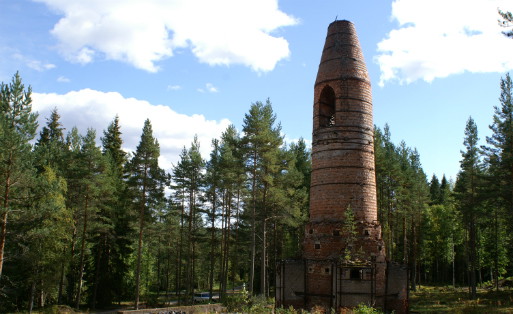
Skålberget.
Zdjęcie: Yvonné Öhrnell
Skålberget
- Historia naturalna
- Województwo: Dalarnas län
- 276.89 km od Ciebie
Akcje
Opis
Skålberget is a protected disused limestone quarry where the geological layers in the exposed bedrock include two levels of light pure limestone called Kullsbergs and Boda limestone.
Skålberget natural monument
Skålberget's limestone quarry was protected as a natural monument on December 13, 1994 to preserve the area's unique geology. The area is owned and managed by Rättvik municipality. You are welcome as a visitor to the quarry, but please respect the regulations.
§ Within the natural monument, it is prohibited to
- conduct quarrying activities
- blasting, breaking off or using tools to affect the exposed bedrock
- remove rock samples either from a fixed cleft or from loose material
- dumping or filling the area in such a way that the exposed bedrock is affected
The first lime burning was done in field kilns
Burnt lime began to be used in Sweden at the time when church building was taking off. It is therefore likely that the construction of Rättvik church in the 13th century gave rise to the first lime burning in field kilns here in the Rättvik area. In the 16th and 17th centuries, masonry fireplaces became more common. This led to a revival of local lime burning. The burnt, slaked lime was mixed with sand and water to make mortar that solidified and held the stones together.
Secondary occupation to agriculture
In the 18th century, travelers in the Dalarna region described lime burning as a sideline to farming. Burning took place in winter, when the farmers had time to do it, in walled-up field kilns, known as lime kilns. The burnt lime was sold over large parts of Dalarna and as far as Hälsingland. It was transported in winter by farmers with a lime shovel, horse and sledge.
In the 1800s, lime burning was a documented important secondary industry to agriculture in the parts of Rättvik and Boda where there is limestone bedrock. However, the conditions for transportation were still primitive. But when the railway came to the area at the end of the century, new opportunities opened up for more industrialized lime production.
Kullberg lime works starts in 1898
Wholesaler J H Munktell at Grycksbo Paper Mill indirectly gave the impetus for some enterprising men from Grändenbyarna to join forces and start Kullsberg Lime Mill in 1898. The lime was needed for paper production. On June 13, 1899, the first delivery of burnt lime went from Kullsberg to Grycksbo. At first, the burnt lime was mainly used as building lime, as a soil improver in agriculture and for paper mills. Later, Domnarvet became by far the largest customer for lime, where it was needed as part of the ironmaking process.
Connecting railroad tracks are built
In 1899-1900, a connecting railroad track was built from Kullsberg to the then Nittsjö Tegelverk AB's narrow gauge railway that led down to the Åkernäs loading point at Siljan. However, the coordination of running times did not work. Kullsberg therefore decided to build its own parallel railway line in 1904. The lime wagons were first pulled by horses. Each horse could pull 4-6 wagons. In May 1924, motor locomotives were introduced and in August steam locomotives.
The kiln at Skålberget is built
In 1927, Rättviks Nya Kalkbruk was founded at Skålberget by the two Västberg farmers Karl Hållams and Skräddar Jon Jonsson. The shaft kiln, whose kiln chimney still stands, was built. Two field ovens were also used. The company soon went out of control and in 1929 it was taken over by Kullsberg. From the 1930s, operations here at Skålberget were in full swing. An extension of the railroad was built in 1931 up to the bridge.
Manual further processing
After drilling and blasting with dynamite, further processing was carried out manually. Excessively large pieces of limestone were crushed with a sledgehammer and the stone was then loaded onto wagons that were driven to the lime kiln. Work in the quarry was done on a piecework basis during the day. Workers were paid per ton of limestone broken and hauled. Burning, on the other hand, took place around the clock.
Quarrying ceases
Mining in the Skålberg quarry continued until the 1940s. It ceased because the limestone contained too much pyrite to be burned into an acceptable lime for the steelworks. The kiln in Skålberget then continued to be used at peak loads until the 1960s. The stone raw material was then transported here from Draggängsbrottet. The kiln house has been demolished.
Działania i udogodnienia
- Historia naturalna
Fakty
Więcej informacji na temat geologii Skålberget można znaleźć na stronie internetowej gminy [Rightvik] (https: / / www.grzechtik.se / culture- fritid- and- tourism- att- besoka- tchartvik / vardefull- nature / skalberget- geology.html)
Wskazówki dojazdu
Jedź autostradą 70 przez centrum sprawiedliwości w kierunku Mory. Na północ od centrum, do Kullsbergs Kalk i Dalhalla. Po około czterech kilometrach, w Kullsbergs Kalk, podążaj za znakiem do Dalhalli. Kontynuuj około kilometra. Podpisano Skålberget na lewo.
Kontakt
Adres
+46 (0)248-700 00
Adres e-mail
Rättviks kommun
Logotyp organizacji

Należy pamiętać, że niektóre z tych tekstów zostały przetłumaczone automatycznie.
Byłam tu 2

Chcę tu iść 3

Pytania i Odpowiedzi
Zadaj pytanie innym użytkownikom Naturkartan.
Opinie
0 reviews
- 5 :
- 4 :
- 3 :
- 2 :
- 1 :