
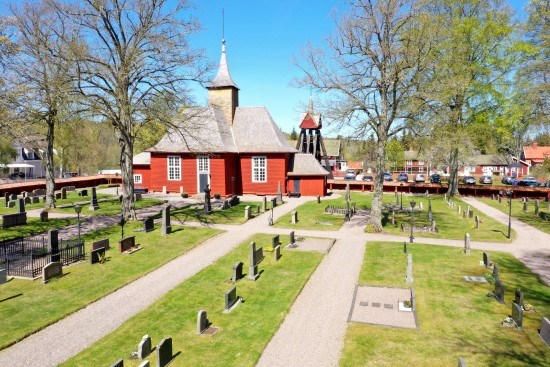
Brandstorps kyrka
- Cultuur
- Regio: Jönköpings län
- 236.18 km van u vandaan
Acties
Omschrijving
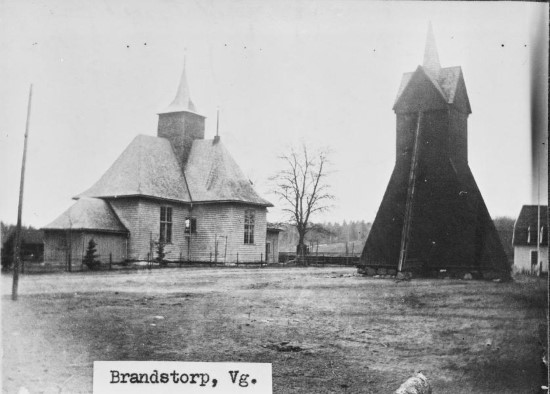
It is not only the church of Brandstorp that is particularly valuable from a historical point of view, but a large part of this parish center has an interesting history.
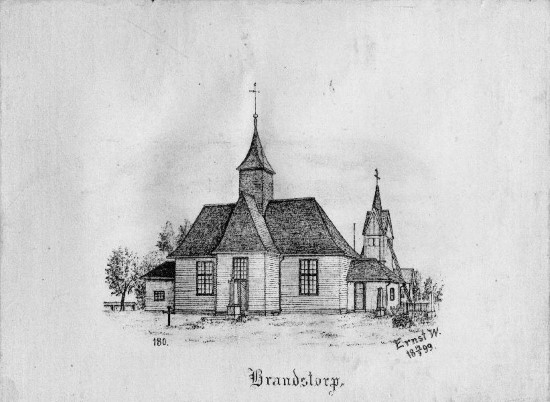
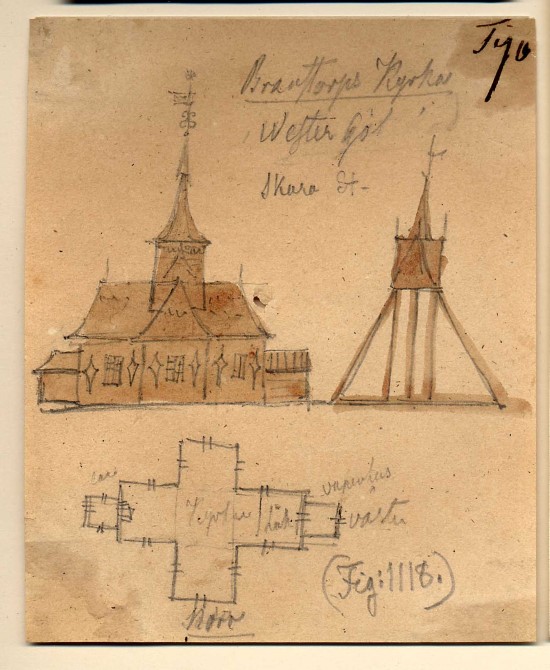
For a long time there was no church here, but in the 1620s a medieval timber chapel was moved here. This chapel is said to have previously stood in the village of Häldesholm a few kilometers to the south. At the end of the 17th century, it was decided that although there was a general need for a chapel here, the existing one was in poor condition. Therefore, a new cross church was built here in 1694-98, and one of the initiators of this was the huntsman Adolf Hård at Skämningsfors. He died during the construction and was buried in the burial chamber under the church. In the burial chamber there are about ten coffins, some of which are very artistically designed and decorated with coats of arms, inscriptions and other decorations.
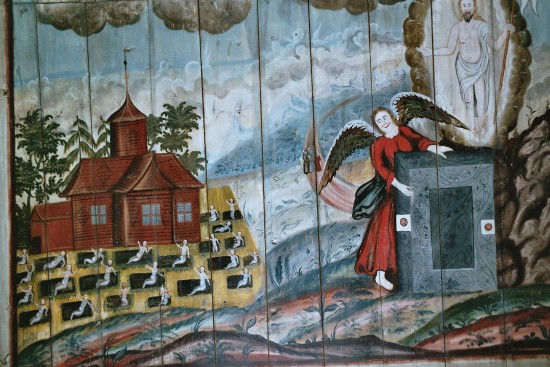
The interior of Brandstorp church was decorated in the 1740s with paintings by the Jönköping artist Johan Kinnerus. A few years earlier, he had participated in the execution of the well-known interior paintings in Habo church. Before that, he had also decorated the chapel in Fiskebäck - which today is Gustav Adolf's church - but the paintings there have long since been lost.
The strange thing is that Kinnerus depicted Brandstorp church in his ceiling paintings inside the church. On the ceiling of the northern transept, you can see the parish church in the painting the artist made to illustrate events from the Bible. These Bible passages tell of the resurrection of Jesus and the Last Day, and show the buried rising from their graves. The picture shows that both the walls and the ceiling of the church were painted red in the 1740s.
A couple of sculptors and painters are associated with Brandstorp church. Johan Ullberg dä was active in Västergötland around the turn of the century 1700 and created the pulpit in 1702 in Brandstorp. Johan Ullberg dy was probably the son of the former. He lived in northern Skåne, but had assignments throughout southern Sweden. He is probably the author of the altarpiece in Brandstorp. What suggests that he created the altarpiece is the well-balanced composition, but the somewhat elaborate figures.
An almost unique phenomenon in Brandstorp is the church beam. A church beam was a timber boundary of a cemetery instead of a stone wall. Such beams were found in many places, including the nearby churches of Habo and Gustav Adolf. The maintenance of the beams was divided between the farmers of each parish and many conflicts arose and there were often complaints about lack of maintenance. In addition, a lot of timber was lost. All in all, this led to a royal decree in 1764 banning the church beams. Some were left standing for a while, but the beam in Brandstorp is one of the very few preserved in the country. The timber-framed mortuary adjacent to the western church beam was previously a warehouse, but was restored and changed function in 1936.
The church's belfry, built in 1708, unusually stands outside the churchyard. It was boarded up in 1860.
Activiteiten en faciliteiten
- Cultuur
Routebeschrijving
Wegbeschrijving
De kerkelijke omgeving van Brandstort is ongeveer 25 km ten noorden van Habo. Op het hoogtepunt van Brandstorp... is er een wegwijzer langs de provinciale weg in 195... die het vertrekpad naar Brandstorp... kerk aangeeft. De kerkelijke omgeving ligt ongeveer 1,5 km ten westen van de samenleving en weg 195.
Contact
E-mailadres
Kultur- och fritidsförvaltningen i Habo kommun
Organisatie-logotype

Sommige teksten zijn automatisch vertaald.
Ik ben hier geweest
Ik wil hierheen
Vragen en antwoorden
Stel een vraag aan andere Naturkartan gebruikers.
Beoordelingen
0 beoordelingen
- 5 :
- 4 :
- 3 :
- 2 :
- 1 :