
Gustav Adolfs kyrka
- Kulturelt miljø
- Fylke: Jönköpings län
- 249.61 km fra deg
Handlinger
Beskrivelse
Each parish church in the countryside was surrounded by an area - a parish - where the parishioners lived. In Habo municipality, there have long been four parishes, but the division has nevertheless changed somewhat.
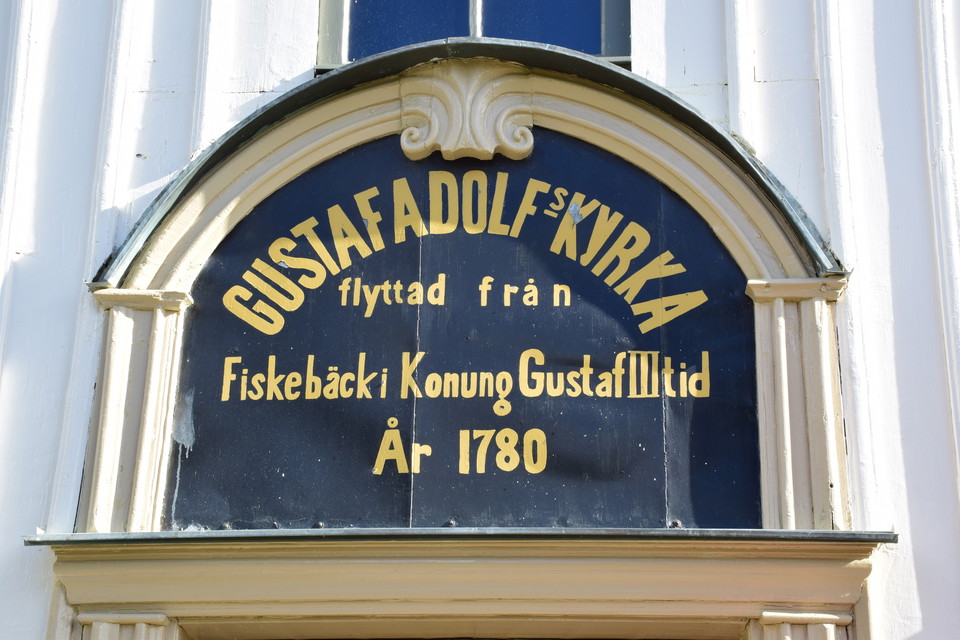
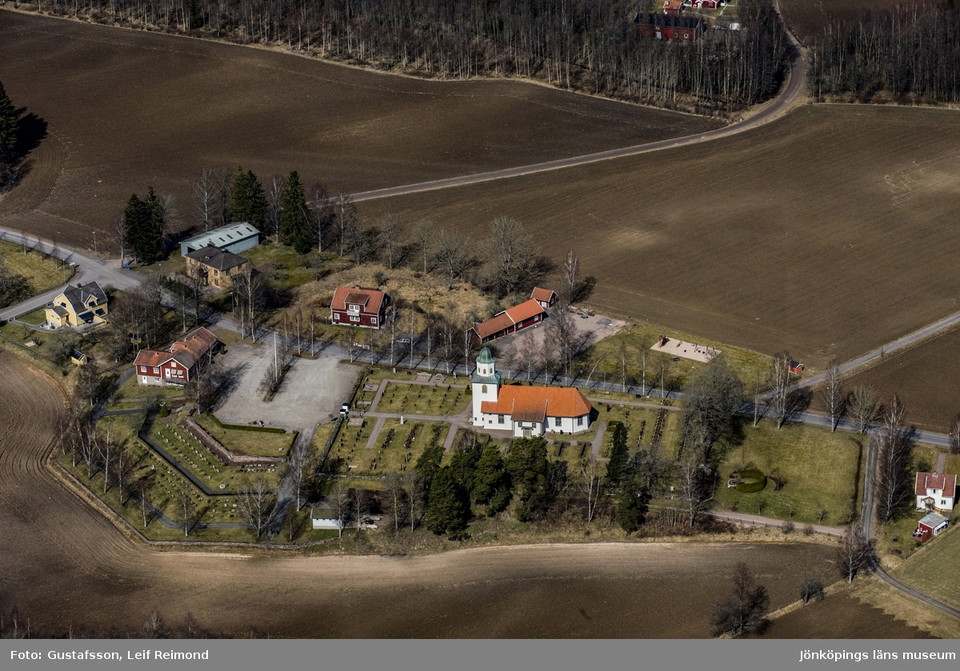
Habo parish was long the largest, and to the south-east of it lay the small parish of Fiskebäck, very close to Lake Vättern. The people in the northwest thought it was too far to the church in Habo. With stubbornness, they eventually managed to convince the authorities that Fiskebäck parish should be incorporated into Habo parish and that a completely new parish should be formed up in the northwest. In 1780, the log church from the 1630s in Fiskebäck was therefore dismantled and rebuilt on the grounds of Lilla Flittered. The site was called Magasinsbacken because the farm owner Carl Reinold von Strokirk had recently built a large warehouse on the site. Although it was King Gustav III who approved the changes, it was the king's son Gustav Adolf who was honored by naming the new parish and church after him.
When the relocated church was to be rebuilt, it was decided not to reconstruct the tower that had stood above the church until the move. Instead, a new tower was built to the west, which was more in keeping with the taste of the time.
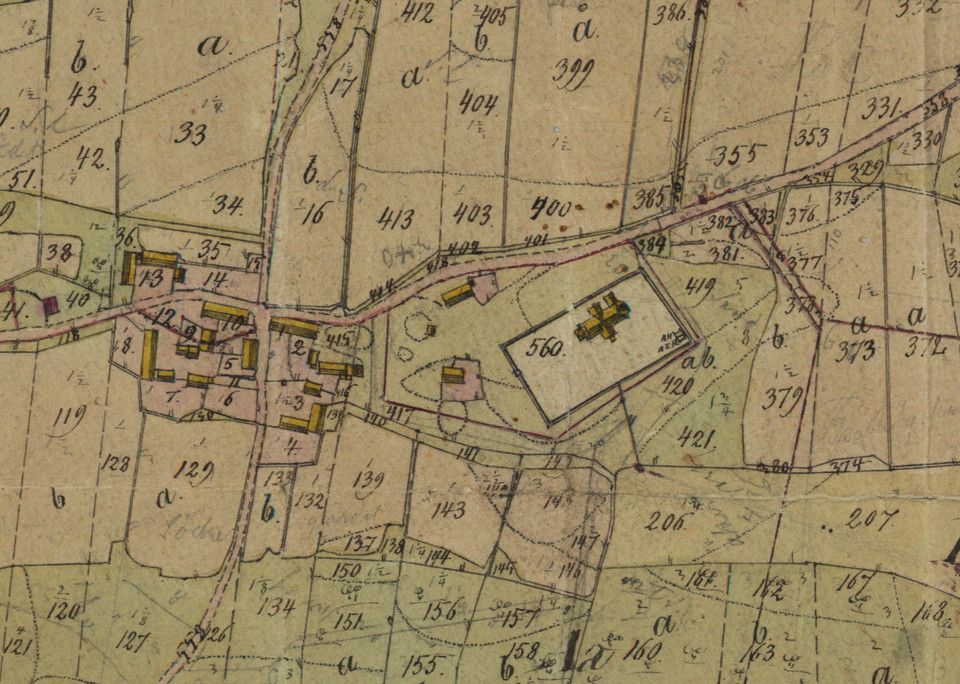
When the church was built on the site, the new cemetery was enclosed with logs instead of a stone wall. Such so-called church beams had not been uncommon in the area, but had actually been banned as early as the 1760s in order to save on timber and use more durable stone walls instead. The church beam in Gustav Adolf was replaced in the middle of the 19th century by stone walls, but today you can still see a timber church beam in Brandstorp cemetery a few miles north.
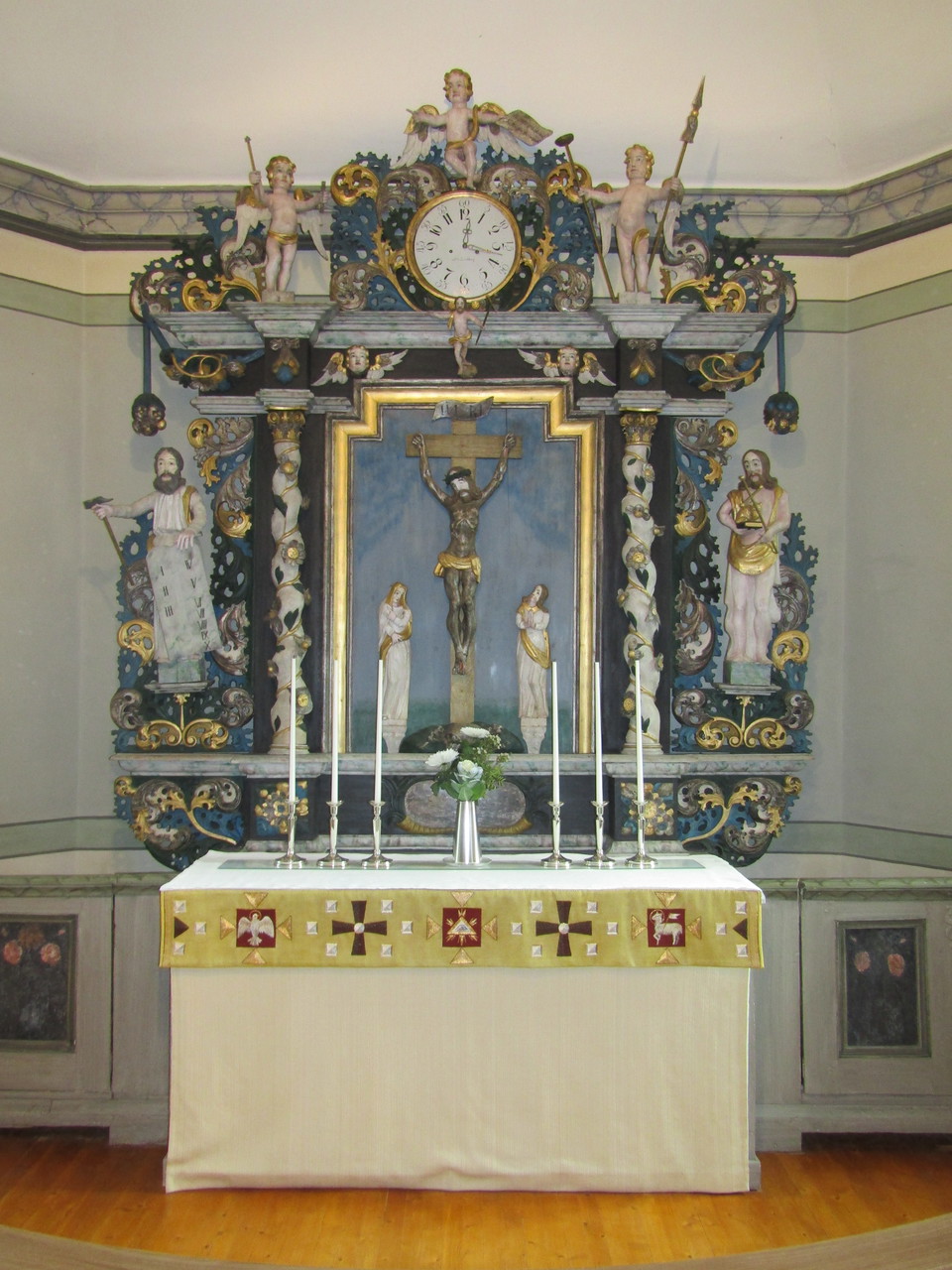
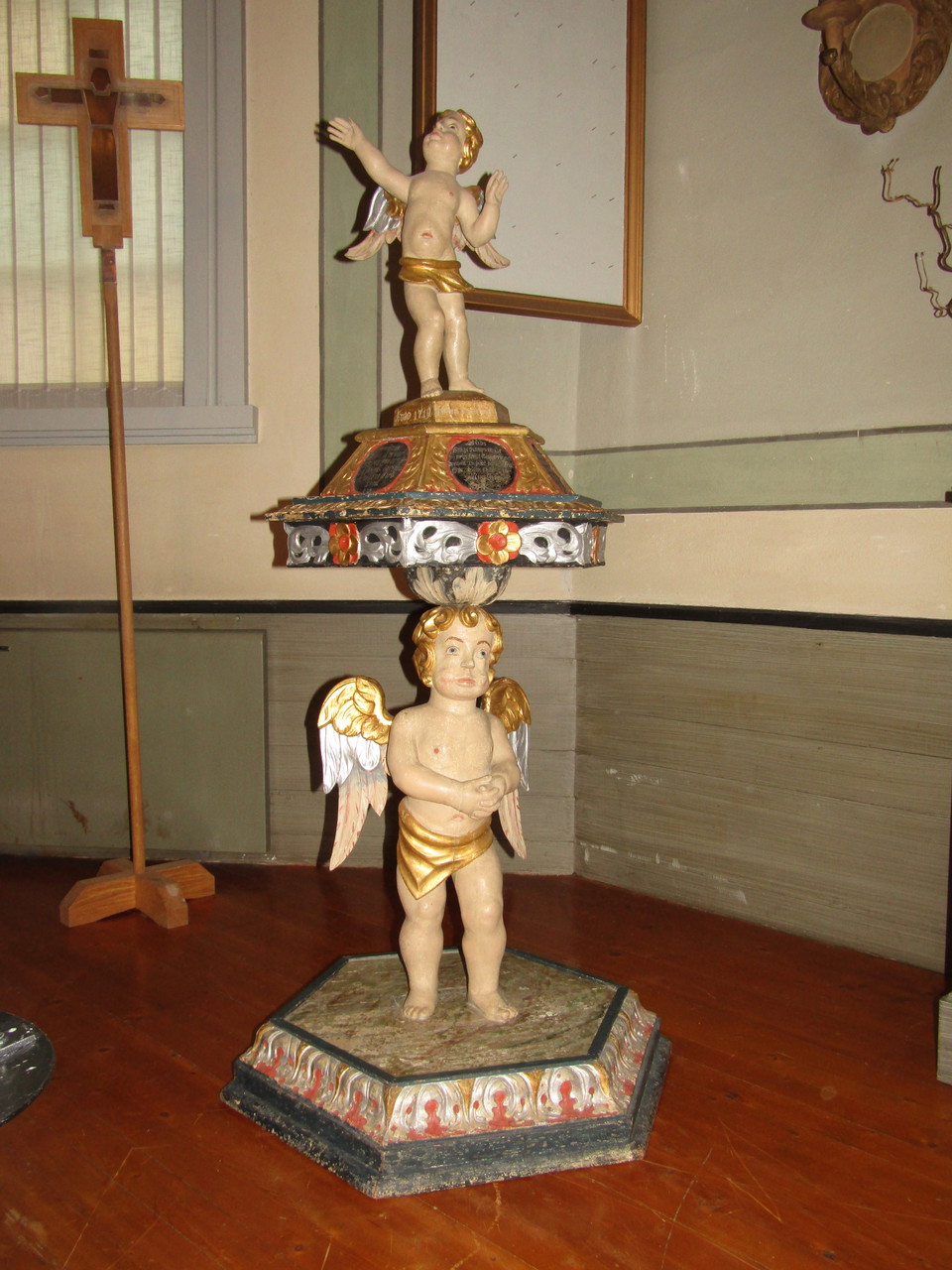
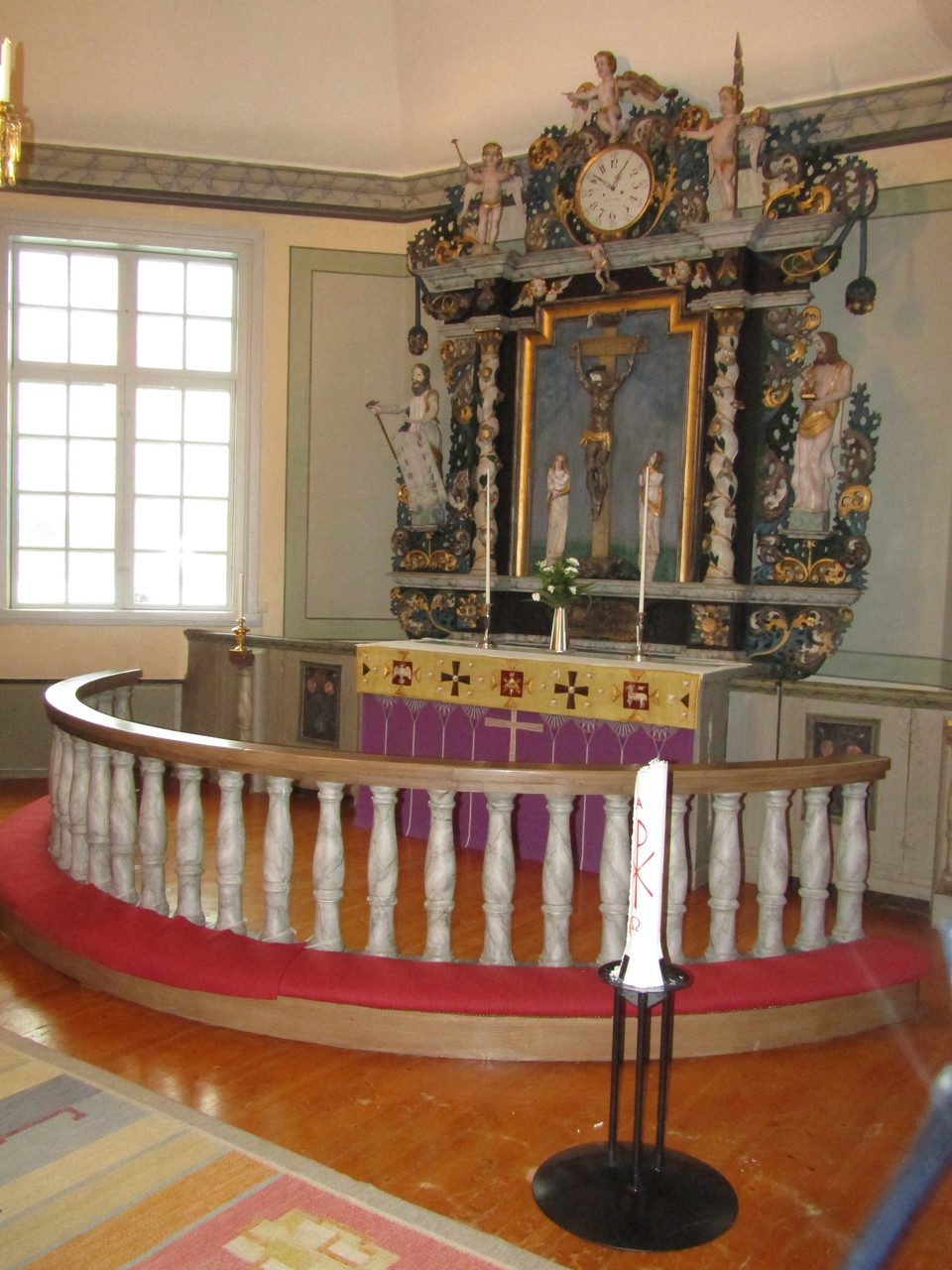
Gustav Adolf's church has many objects of cultural and historical interest that were used in worship. In the chancel there is an altarpiece from 1717, depicting the crucifixion, with a clock face on top, which is unusual. The altarpiece was probably made by Jonas Ullberg, who also made the church's wooden font.
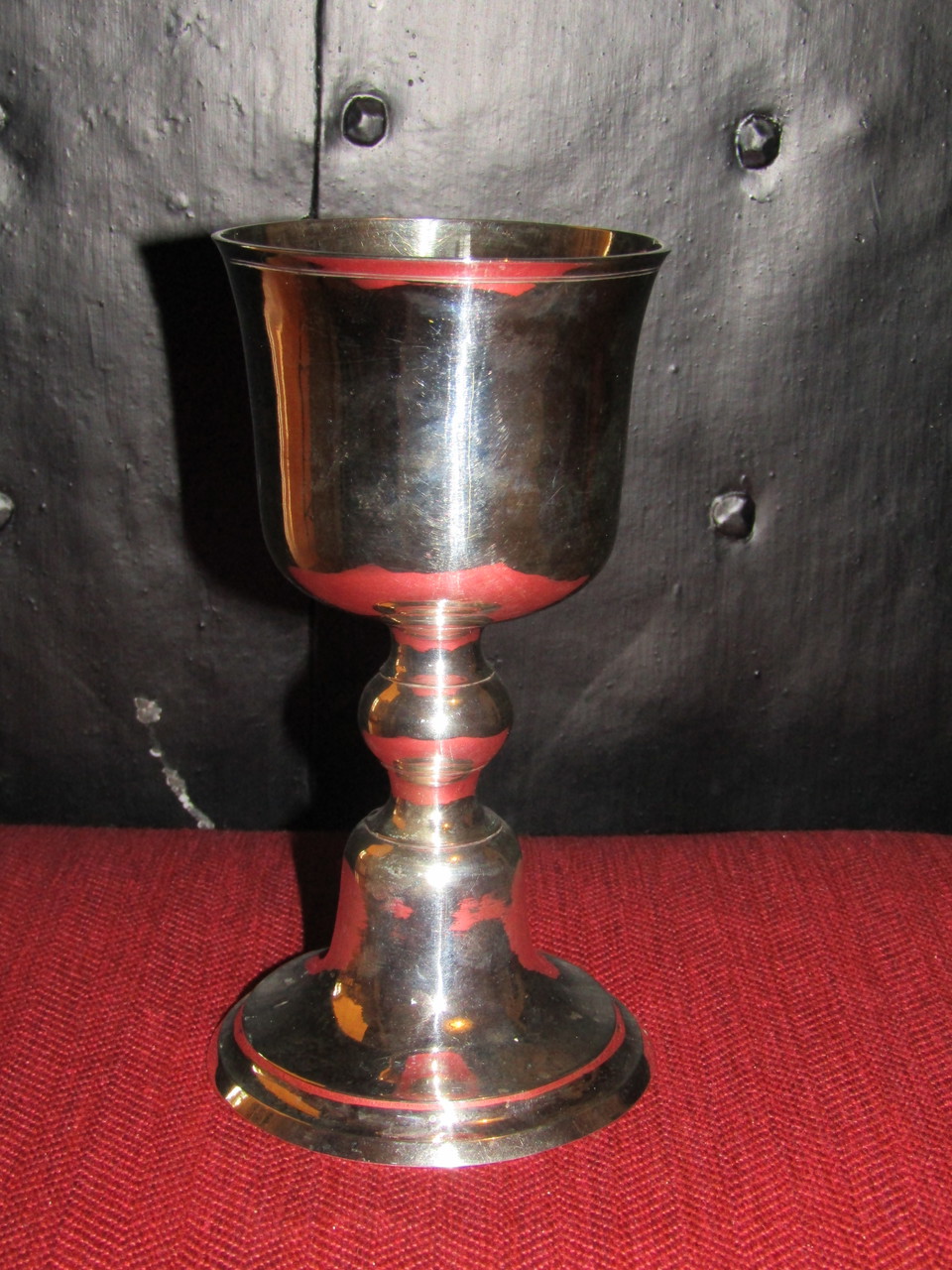
The church also has communion silver made in 1823 by silversmith Bengt Fredrik Tellander, Jönköping. It is a chalice and a paten, i.e. the vessel for the wine and the dish for the wafer bread. New communion silver had to be ordered in 1823 because the church had been broken into the year before. In early December 1822, thieves broke into the church, through a window, through the sacristy door and into the church chest. Among the items stolen were the communion silver, pewter candlesticks, a baptismal bowl and a towel.
The church is surrounded by a cemetery with several interesting gravestones and wrought iron crosses. The largest of all is the memorial stone south of the church building to Zachris Nilsson, who was the driving force behind the relocation of the church. The stone was erected a hundred years after the church was moved.
Aktiviteter og fasiliteter
- Kulturelt miljø
Veibeskrivelse
Directions
Gustav Adolf's church environment is located north of Habo. There are several road signs along county road 195 indicating turn-offs towards the church. The church is located about 4 km west of road 195.
Kontakt
E-postadresse
Kultur- och fritidsförvaltningen i Habo kommun
Organisasjonens logotype

Jeg har vært her
Jeg ønsker å dra hit
Spørsmål og svar
Still et spørsmål til andre brukere av Naturkartan.
Omtaler
0 anmeldelser
- 5 :
- 4 :
- 3 :
- 2 :
- 1 :