
-
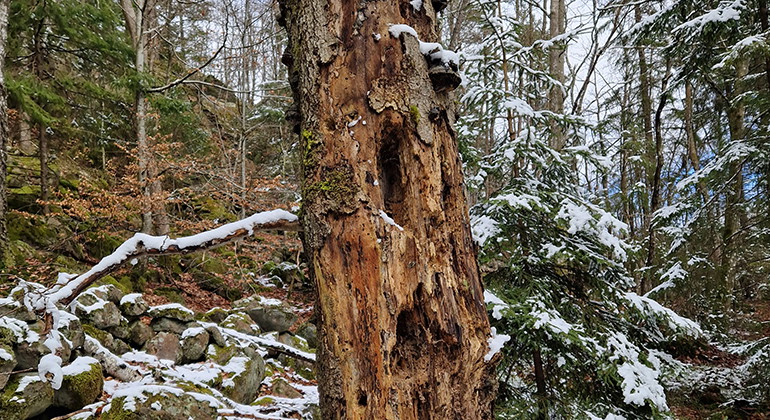
Högstubbe -
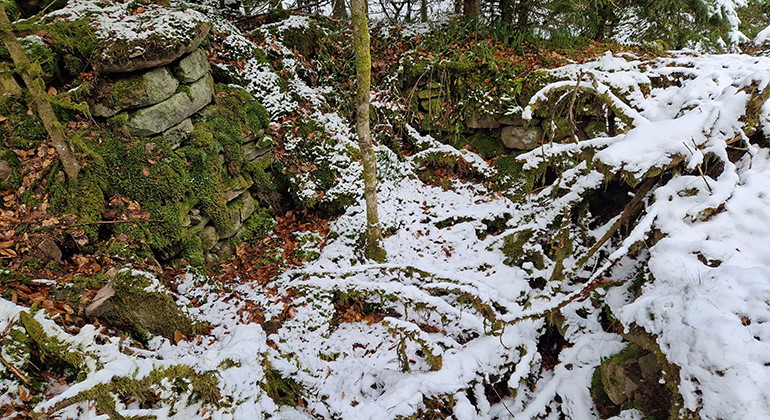
Torpruin -
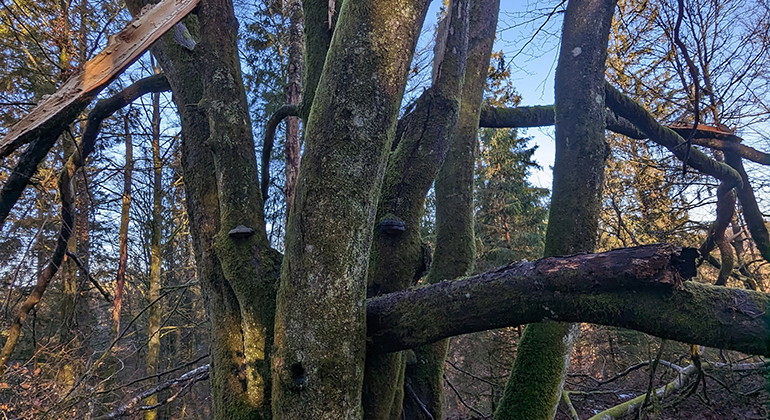
Stubbskottsträd -
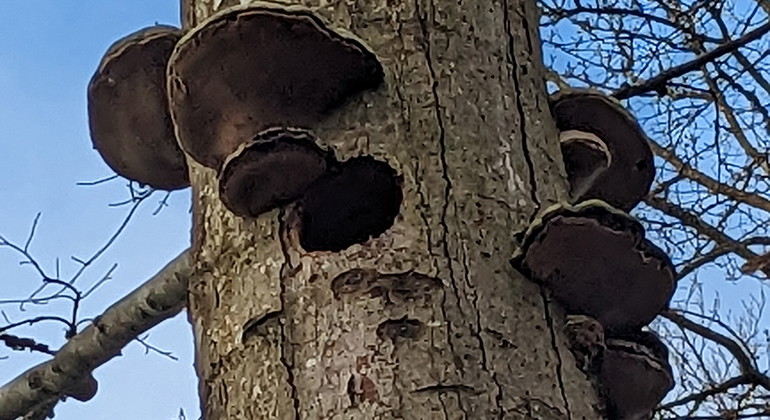
Spillkråkebo i bok -
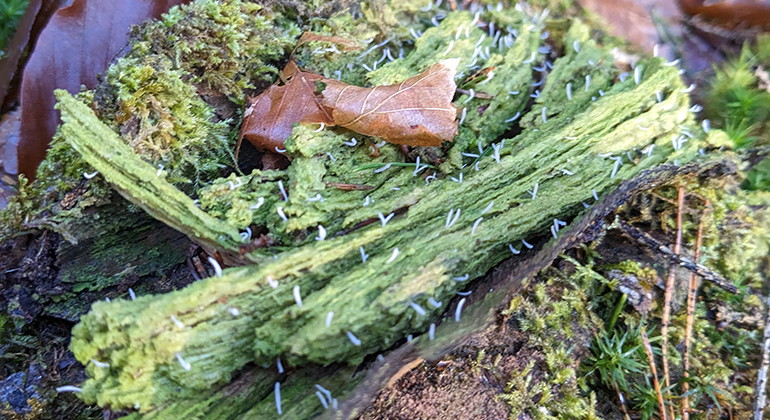
Vedlavklubba -
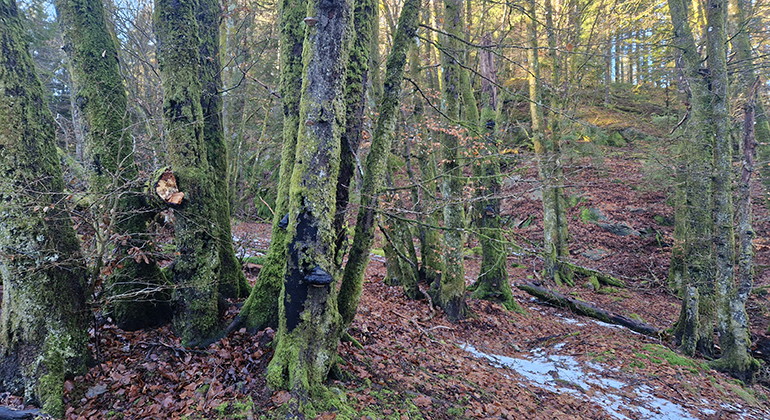
Stubbskottsträd
Lapparetorpets naturreservat, Naturreservat
- Naturreservat
- Fylke: Hallands län
Handlinger
Beskrivelse
Lapparetorpet is a hilly forest area beautifully situated next to the western shore of Lake Furesjön. The northern half of the reserve is dominated by beech forests with elements of oak and other tree species, while the southern half is more coniferous. In the center of the area there are some clearings and planted spruce stands, which will eventually be converted to deciduous and mixed forests. The reserve is suitable to visit all year round. There are no landscaped paths in the reserve, but there is a dirt road that runs through the area and facilitates accessibility.
In the western parts of the reserve, there seems to have been forest continuity over the last 300 years and this is also where most of the old beech trees are found. Many species of mosses, lichens and fungi thrive in the old beech forests. The reserve is also of great value for nesting birds, including the red-listed woodpecker, the chipping crow, which pecks out its nests in the beech trunks. After the woodpecker abandons its nests, other bird species can take them over. The woodpecker therefore plays a key role in forest biodiversity.
The name is linked to the croft in the reserve
The name of the reserve is linked to the croft that existed in the center of the reserve during at least the 18th and 19th centuries. Older maps show that there was a "cabbage garden" and other cultivated land and meadows around the croft. North of the meadows runs a high stone fence whose function is said to have been to protect the meadows from the grazing animals that went on the outfields around it. During the dry period, the landscape was much more open than today, even in the outlying areas, as can be seen on maps from this period. In the eastern parts, for example, the land is referred to as 'heathland'. The presence of sparse old trees and thinning juniper bushes in today's forests also testify to a formerly more open landscape. The ruins of the croft still exist today, and there is also the ruin of a hut in the southern part of the reserve.
There are many stump sprout trees here
Another interesting cultural trace from the crofting period is the many bouquet-growing former stump shoot trees found in the western parts of the reserve. Stump sprouting is when younger trunks are allowed to grow from a stump, and then after a few years these trunks are cut to obtain smaller timber for domestic use and sometimes also leafy fodder for the animals. When stump grinding ceased, the trunks grew into their current bouquet shape.
The reserve can be visited all year round
The reserve is suitable for year-round visits. When the beech leaves burst in early May, the beech forests in the northern half of the reserve are bright green and pleasant to walk in. There are no paths in the reserve and the terrain is quite sloping in some places, but a dirt road runs through the area and facilitates access.
Aktiviteter og fasiliteter
- Naturreservat
Fakta
Dominant habitat type: Mixed forest
Municipality: Varberg
Area: 16.8 hectares
Protected since: 2024
Owner: Private
Trustee: County Administrative Board
Veibeskrivelse
The reserve is located in Varberg municipality.Bus: You can get to the reserve by bus 661 between Varberg and Nösslinge. By car and bicycle: From Nösslinge follow the road east, out of the village. After about 1.5 kilometers, there are signs to the left towards Skammerhult. Here you continue straight ahead for another 100 meters until you reach a gravel road on the right side of the road. Note that this gravel road is private, which means that you as a visitor to the reserve are not allowed to drive in here. If you come by car, you must instead park in a suitable place along the asphalt road and then enter the gravel road. Cyclists and pedestrians may travel on the gravel road, which you then follow for just over 300 meters before the reserve is on the right side.
Forskrifter
To protect the nature reserve, the County Administrative Board has decided on special regulations, including those that you as a visitor to the area must follow and respect.
In addition to what applies under other legislation, it is forbidden to:
- damage living or dead standing or lying trees and bushes,
- damage, pick or collect mosses, lichens or fungi other than single specimens. The prohibition does not apply to the picking of edible mushrooms,
- burning
- planting plant or animal species alien to the area
- driving a motorized vehicle. However, the prohibition does not apply to hunting rights holders when transporting moose, deer and wild boar,
- erecting a board, poster, sign, signpost or making an inscription, and
- during the period April 1 - August 15 enter the area marked on the decision map
- organize camps, competitions or other events without the permission of the County Administrative Board
- carry out surveys that involve marking, collecting, trapping or other impact on the natural environment. However, this permit requirement does not apply to the collection and killing of invertebrates if the collection is required for a reliable species identification to take place, it is done manually by picking, scooping or similar (i.e. not with traps) and it is done without damaging bark, wood or other substrates. The permit requirement also does not apply to the picking of plants, berries or edible fungi.
Kontakt
Adresse
Kontakta reservatsförvaltningen för frågor, synpunkter och felanmälan.
E-postadresse
Länsstyrelsen i Hallands län
Organisasjonens logotype
Jeg har vært her
Jeg ønsker å dra hit
Spørsmål og svar
Still et spørsmål til andre brukere av Naturkartan.
Omtaler
0 anmeldelser
- 5 :
- 4 :
- 3 :
- 2 :
- 1 :