
-
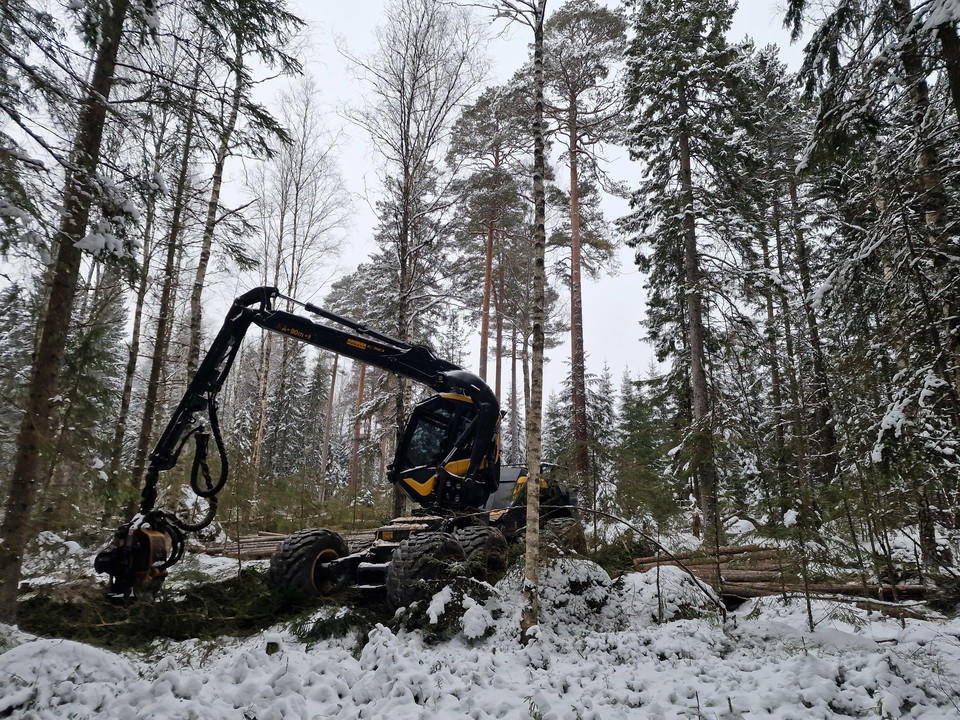
Foto: Sebastian Arne
Hyggesfritt skogsbruk, Skinnskatteberg - Färnaleden
- Point of interest
- Hiking
- Information
- County: Västmanlands län
- 161.62 km away from you
Actions
Description
**Definition
In October 2021, the Swedish University of Agricultural Sciences (SLU), together with the Swedish Forest Agency, produced a joint definition, with the aim of describing what coppice-free forestry means. The formal definition reads:
_Clearcut-free forestry on forest land with production goals means that the forest is managed in the long term so that the land is always covered with trees without creating any large clear-cut areas.
The above definition means that the landowner has the intention to manage the forest in the long term without cutting. Here are some formal examples of what coppice-free forestry can mean:
- That there are always trees of a certain height (at least 10 m) on the land and that the density of the forest always exceeds a certain volume, in reference to generally decided diagram values (SVL 5§).
- That if a coherent group of trees is harvested and forms a gap in the stand (gap felling), the area of this gap should not be too large (max 0.25 hectares = 50x50 meters). And that a new gap adjacent to the old gap must not be created until the new trees of the old gap have reached a sufficient height (an average height of 2.5 m).
- That the trees in the forest should be of different heights, in different layers, with the top layer (maintained screen) providing shelter for the younger trees and also helping to disperse seeds with the wind (natural regeneration).
Clear-cut forestry thus tries to minimize clear-cut areas. This is in contrast to what we refer to as felling, where larger clearings are part of the management. Today, in 2024, the most common forest management system in Sweden on productive forest land is coppicing.
However, in both clear-cut forestry and felling, the same consideration must be given to cultural environments, environmental values, social values and reindeer husbandry. And in both methods, forest management of the areas (stands) in question should be adapted to the characteristics of the soil and tree species, also known as stand adaptation.
Today, clear-cut forestry, and its positive effects, are seen as a welcome complement to felling. This is partly because clear-cutting methods often benefit the biodiversity of an area.
**Methods
Clear-cut forestry mainly uses three proven methods, these are called thinning, gap felling and maintained screen.
Thinning is a method that originated in continental Europe. The method involves trying to ensure that the forest is multi-layered or fully layered after felling, i.e. that the forest always contains trees of all heights. In the case of thinning, which is also what we usually refer to as picking to some extent, certain trees that are deemed ripe for harvesting are continuously thinned out. Thinning is a method that is usually best suited to a forest, or a stand, that is already somewhat "wild". This is because you have a variety of different tree heights to start from.
Hatch cutting can be described as several mini clearcuts within a stand. However, the total area of each gap must not be too large (maximum 0.25 hectares = 50x50 meters, according to the current definition) and the gaps must not be too close together.
The maintained screen is a method that usually aims at a two-layered forest that is gradually thinned and that should always contain at least 25 large trees per hectare. This method is mainly used on land where pioneer species, usually pine, are to be grown.
**Advantages
Coppicing can promote forest biodiversity, which has many advantages. By harvesting the forest's timber with fewer clear-cuts, cultural, environmental and social values can be promoted while maintaining the forest feel of the place. Under the social values we find, among other things, the invigorating experience that a visit to a diverse forest can offer. This in turn can lead to increased multiple use of a forest, for example through nature tourism. Clear-cut forestry is particularly suitable in areas where reindeer husbandry takes place, as the remaining trees create favorable conditions for lichens, the reindeer's most common food. Other benefits of coppicing can include reduced risk of insect pests (e.g. pine weevil and spruce bark beetle), increased opportunity for variation in timber quality, and possible reduced costs for planting and clearing.
Activities And Facilities
- Hiking
- Information
- Point of interest
Facts
Den här skylten är en del av Skinnskatteberg - Färnaleden.
Genom projektet Ledutveckling Skinnskatteberg-Färna, Trails of Västmanland Expansion 2022-2024, med ekonomiskt stöd från Tillväxtverket, har leden förbättrats och försetts med informationsskyltar. Varje informationsskylt har sin egen punkt på Naturkartan där mer fakta kring varje ämne samsas med länkar till ytterligare läsning.
Projektet har samordnats av Skinnskattebergs kommun i samarbete med SLU Skinnskatteberg som kunskapspartner med stöd från olika lokala intressenter och markägare. Jonas Vildmark Bushcraftcenter har genom förarbete, fysiskt arbete på leden och kunskapsinhämtning drivit arbetet.
Contact
Address
Box 101, 739 22 Skinnskatteberg
Email address
Veronica Dahlberg
Organization logotype
Please be aware that some of these texts have been automatically translated.
I’ve been here
I want to go here
Questions & Answers
Ask a question to other Naturkartan users.
Reviews
0 reviews
- 5 :
- 4 :
- 3 :
- 2 :
- 1 :