
-
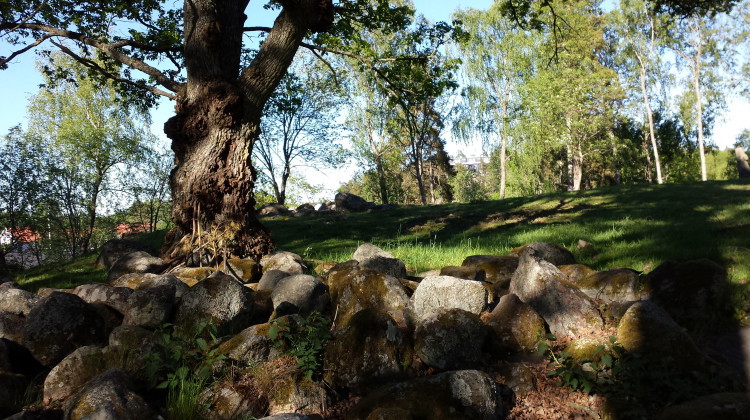
Skälby gravfält.
Photo: Tiina Laantee -
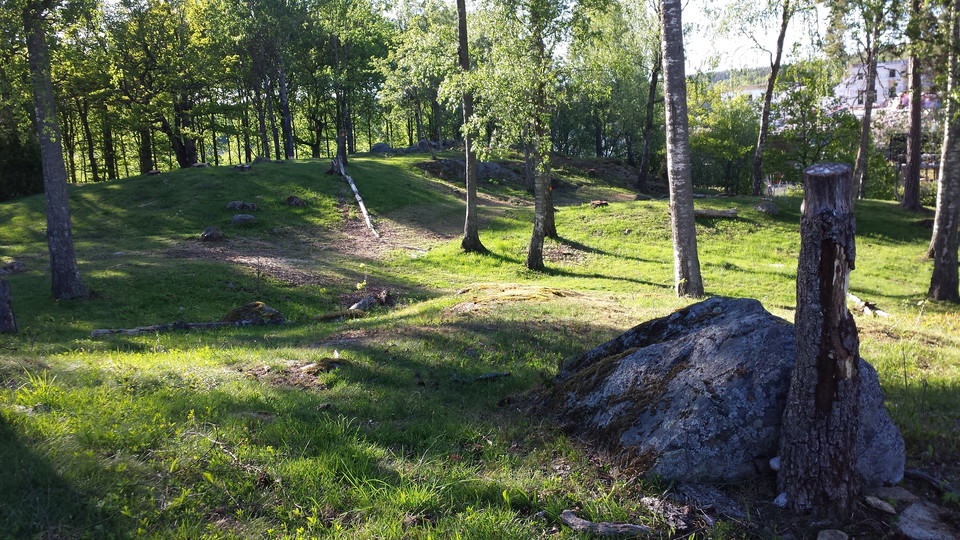
Skälby gravfält.
Photo: Tiina Laantee -
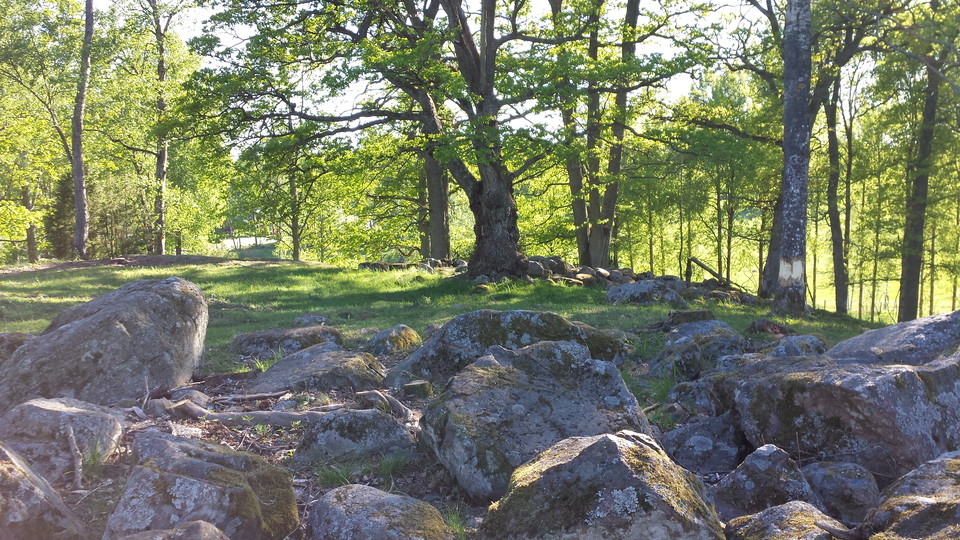
Skälby gravfält.
Photo: Tiina Laantee -
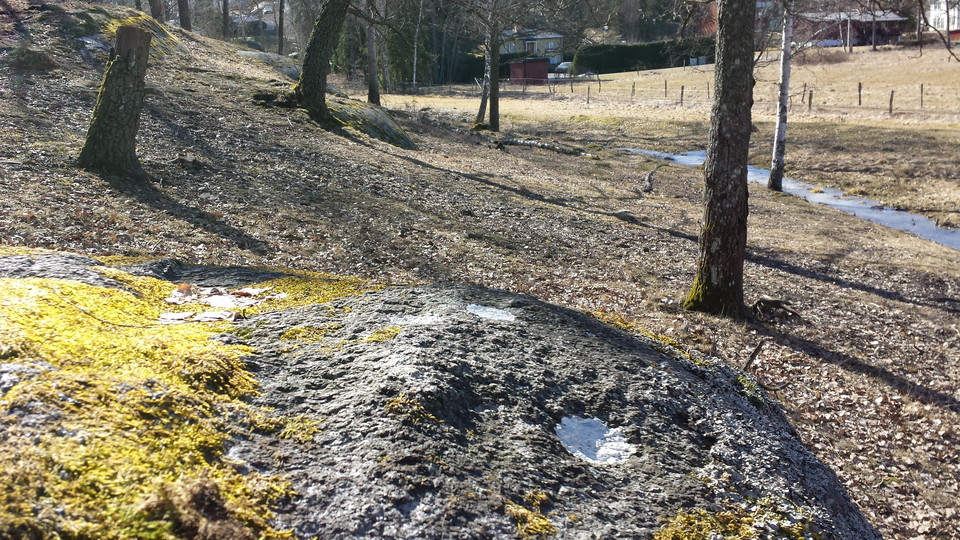
Skålgropar på stort stenblock.
Photo: Tiina Laantee -
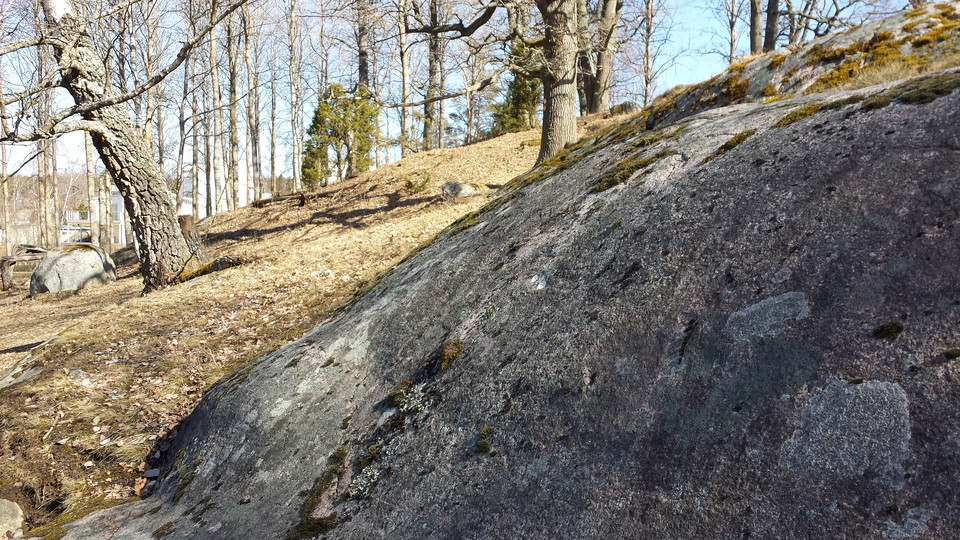
Skålgropar på lodrät häll.
Photo: Tiina Laantee -
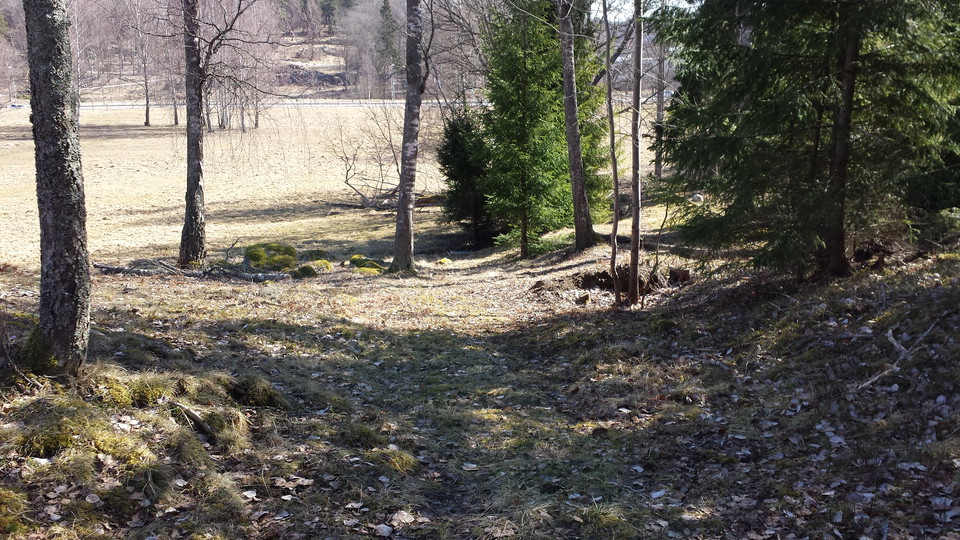
Hålvägen.
Photo: Tiina Laantee -
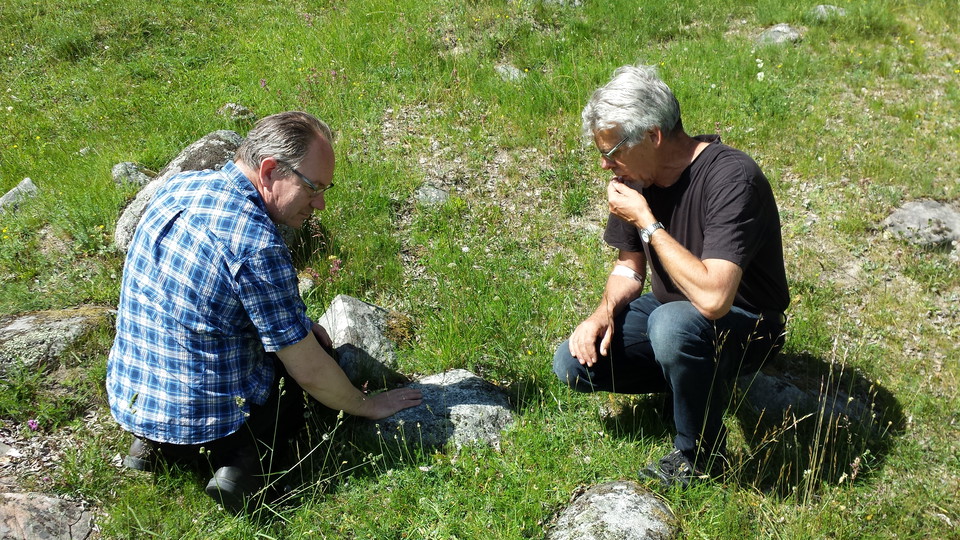
Beundran av slipytestenen.
Photo: Tiina Laantee
Skälby gravfält
- Culture
- County: Stockholms län
- 36.67 km away from you
Actions
Description
Skälby burial ground is located in a pasture belonging to Lövsta farm. The area consists of many flat burial mounds. There are about 25 visible round stone circles, most with earth and stone mixed. At the top are two large stone piles of different types. One has a stone filling of evenly sized boulders and the other has stone lines starting from a center point. More unusual boulders of red granite (rapakivi granite) can also be found here. These have probably been specially selected. The burial ground is probably from the Early Iron Age and the graves are therefore 2000 years old. An old oak with character grows in the western rock pile.
Bowl pits are found in the west, partly on an almost vertical rock and partly on top of a large boulder. They have been filled in with white paint to make them easier to find. Bowl pits are usually from the Bronze Age and therefore older than the visible graves. They are thought to be ritual rock carvings. Perhaps sacrifices were made in the pits or gods were invoked when they were knocked out?
In the southeast there is a hollow way, i.e. an ancient road. In the northeast, stone lines follow the edge of the flat former arable land. They are the remains of ancient fences. One of these stones is a grinding stone. On the flat arable land to the east, towards Hageby allé, there appear to be traces of very old arched field strips in a north-south direction with ditch swales in between.
In the northeast, down towards Lövstaån, there is a spring called Karl den tolvftes källa or dragonarn. Charles the Twelfth's dragoons are said to have watered their horses here in the 1600s. The hills in the area are natural pastures where plants that have benefited from mowing and grazing since the Bronze Age remain, such as briar, maidenhair fern, white poppy, meadow sorrel, spring savory, sheep's fescue, etc.
Activities And Facilities
- Culture
Contact
Address
Har du frågor om vår natur och våra naturvårdsområden maila till kommunens servicecenter
Email address
Huddinge kommun Servicecenter
Organization logotype

Please be aware that some of these texts have been automatically translated.
I’ve been here 4




I want to go here 5


Questions & Answers
Ask a question to other Naturkartan users.
Reviews
2 reviews
- 5 :
- 4 :
- 3 :
- 2 :
- 1 :

väldigt kewl ändå vi hade det revligt jag och frugan häslnigar per