
-
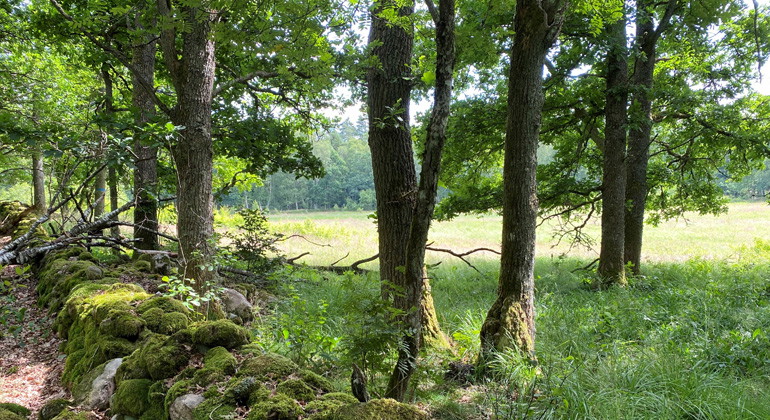
Photo: Mona Persson -
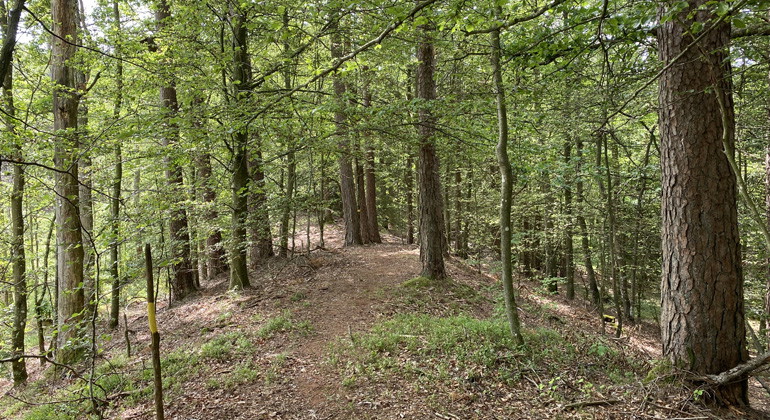
Photo: Mona Persson -
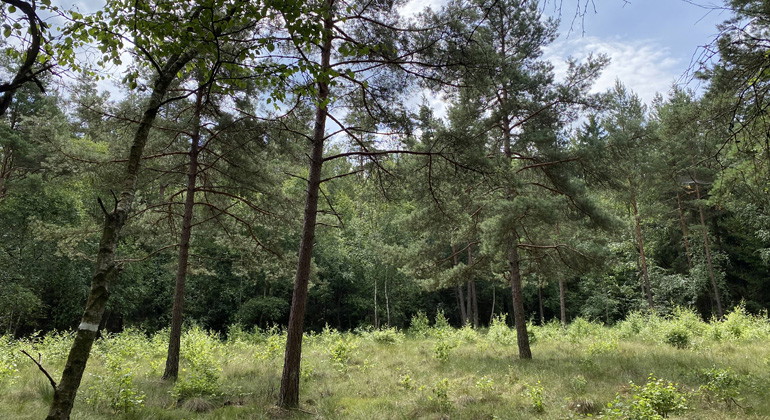
Photo: Mona Persson -
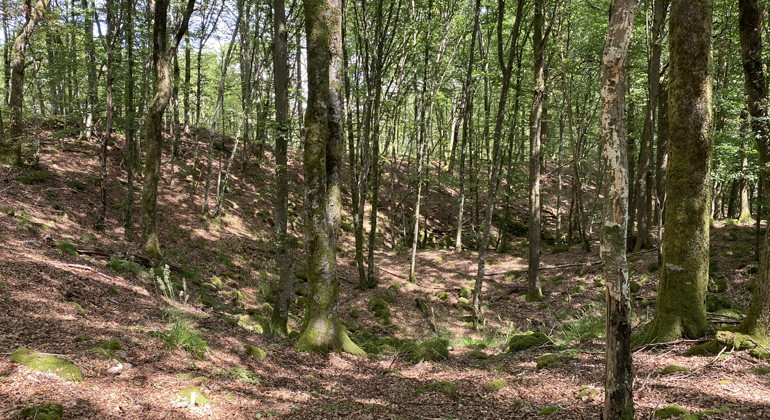
Photo: Mona Persson -
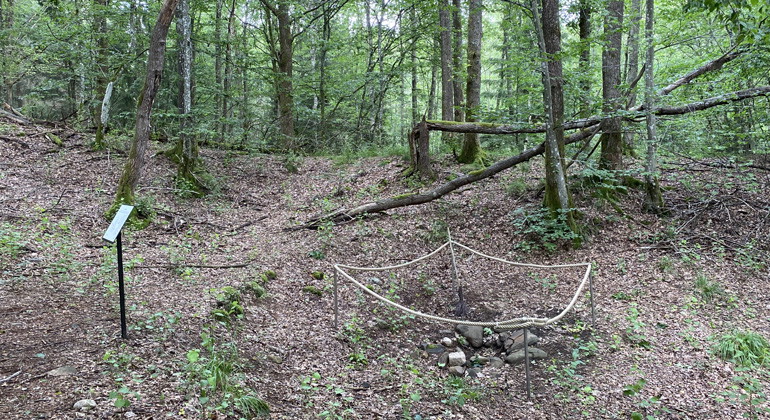
Rester av en blästerugn.
Photo: Mona Persson -
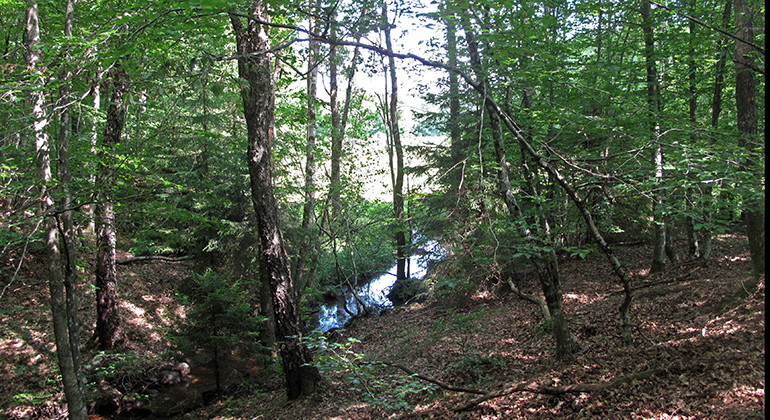
Bäck som ringlar sig genom skogen.
Photo: Marie Björkander
Linneröd, Naturreservat
- Nature reserve
- County: Skåne län
Actions
Description
Linneröd nature reserve consists mainly of a mixed deciduous forest. The land has long belonged to one of the farms in Linneröd. The farm has not been actively farmed since 1965 and the forest has long been allowed to develop freely. The land was donated to the local nature conservation association Klippanbygdens Natur, which has now created several hiking trails in the area.
The forest that has developed freely
Linneröd consists mainly of mixed deciduous forest but also contains small areas of pasture. The lichen and mushroom flora is rich in the area and bird life includes several woodpecker species and wood pigeons.
Traces of older iron production
In the nature reserve there is an ancient monument in the form of a blast furnace that dates from the time when bog ore was converted into iron. West of the blast furnace there is also a mineral spring.
Outdoor life
In Linneröd there are three different trails for hikers. Fornfyndsrundan (white) is 2.5 km, Åsrundan (blue) is 2.1 km and Dammrundan (yellow) is 1.6 km. Klippanbygdens natur, which owns and manages the area, has a map Opens new window of the trails on its website. Remember to take your rubbish home.
In English
Welcome to Linneröd Nature Reserve
In Linneröd Nature Reserve you find a varied forest environment with visible traces of past
human activities. The marked trails take you up to the top of the ridges and down to the birdlife around the constructed pond.
The land in the reserve was donated in the early 1990s by the three siblings Inga, Ivar and Gösta Larsson to the Klippanbygden Society for Nature Conservation. The family stopped managing the forest in the 1950s, and it has been allowed to develop freely since then. The result is a varied forest environment with both deciduous and coniferous trees. Mixed deciduous forest interspersed with conifers dominate, while the eskers are covered in nutrient-poor oak and beech forest.
Down in the moist depressions between the ridges are forested wetlands and open bog plains. The river Bäljane, a valuable watercourse containing e.g. mudskippers, runs through the eastern part of the reserve.
Living cultural heritage. People who once lived in the area have left traces in the reserve. Clearance cairns and stone walls show that cultivation took place here. In the north-western part is Mölledammen, now a damp meadow. In the past, it had a double function: In winter, it was dammed up to supply power for the water mill. In summer, the pond was drained, and thanks to nutrients in the soil from the water, it could be used as a hay meadow. There are also remains from medieval iron production by way of a bloomery furnace.
Walking trails. Marked paths lead to different parts of the reserve. It is also possible to walk
along the river Bäljane even if there is no marked trail. Tables and benches have been placed by the pond, where you can picnic in the company of birds and damselflies.
Regulations
Within Linneröd Nature Reserve it is forbidden to:
- put up boards, signs, inscriptions, posters or similar,
- raise any form of construction or erect objects alien to the reserve,
- park other than in designated parking area,
- drive motor vehicles or ride bicycles outside existing roads,
- ride or drive horses other than on existing road,
- light fires, including the use of grills, disposable barbecues or camping stove,
- camp or park caravans, campers or similar,
- bring dogs unless on a physical leash.
Furthermore, without permission from the County Administrative Board, it is forbidden to:
- hold or organize competitions, orienteering, quiz walks or similar events, and in connection with these put up boards, signs, paper strips, placards, posters or similar,
- catch insects, spiders, gastropods or other invertebrates other than by netting, hand picking or other selective method with subsequent reintroduction within the nature reserve,
- collect mosses, lichens or wood-living fungi.
Activities And Facilities
- Nature reserve
Facts
Established: 1993
Size: 44 hectares
Municipality: Klippan
Manager: Klippanbygdens naturskyddsförening
Protection type: Nature reserve and Natura 2000
Directions
Walk, cycle, take public transport or drive here. Map and directions via Google maps or coordinates (WGS84).
Regulations
**Within the area, special rules and restrictions apply to the right of public access.
For example, it is forbidden to:
- have a dog unleashed
- camping
- setting up a caravan/mobile home
- light fires, including disposable barbecues or outdoor kitchens, other than in designated areas
- drive a motor vehicle, bicycle or horse off the existing road
Existing road means the road that runs through the western part of the nature reserve.
It is important to note that this is only a selection of the rules.
Full regulations for visitors
In addition to regulations and prohibitions in other laws and regulations, it is forbidden to:
- put up a notice board, sign, inscription, poster or similar,
- carry out any form of construction or set up objects foreign to the nature reserve,
- park other than in the designated parking lot,
- drive a motor vehicle or bicycle off the existing road
- ride or drive a horse off the existing road
- make fires, including using barbecues, disposable barbecues or open-air kitchens except in designated areas
- camping or setting up a caravan, motorhome or similar
- bring a dog other than on a physical leash.
Furthermore, it is prohibited without the permission of the County Administrative Board:
9. arrange and organize competitions, orienteering, tip rounds or similar events, and in connection with this put up a board, sign, string, poster, poster or similar device.
10. catch insects, spiders, shells or other invertebrates other than by scooping, hand picking or other selective method with subsequent release within the nature reserve. The requirement for release does not apply to single specimens of each species, provided that the findings are registered in the Species Portal or equivalent national database for species and that the collection does not violate the conservation regulations,
11. collect mosses, lichens or woody fungi, with the exception of single specimens, provided that the collection does not violate the conservation rules.
*Existing road means the road that runs through the western part of the nature reserve.
Regulations updated 2019-03-14
Please be aware that some of these texts have been automatically translated.
I’ve been here 1

I want to go here
Questions & Answers
Ask a question to other Naturkartan users.
Reviews
0 reviews
- 5 :
- 4 :
- 3 :
- 2 :
- 1 :