
-
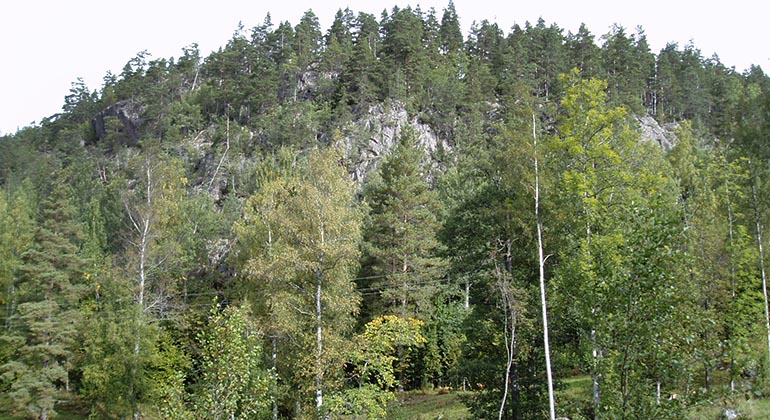
Skåle.
Photo: Daniel Gustafson -
-
Skåle.
Photo: Daniel Gustafson -
Skåle.
Photo: Sandra Thunander -
Skåle.
Photo: Daniel Gustafson
Skåle, Naturreservat
- Nature reserve
- County: Örebro län
Actions
Description
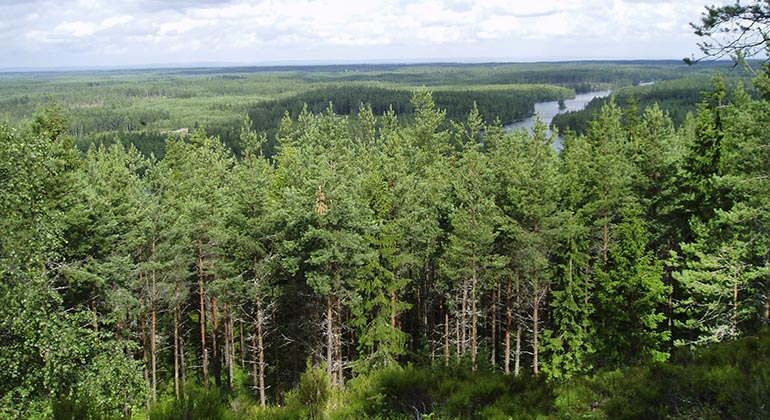
Skåle Nature Reserve is characterized primarily by its dramatic landscapes. Here you can see clear traces of the inland ice and the ancient sea in the form of shingle fields. From the Skåleklint hilltop you have an impressive view of Lake Tisaren and the surrounding woodlands. The damp hollows are home to a rich and varied plant life. A large number of mine holes in the area tell of the area's long history of rock handling.
Bring your own firewood!
At the moment we do not have the possibility to supply the fireplace with firewood. Are you planning to grill or make coffee over an open fire? Don't forget to bring your own firewood or coal.
A strange landscape
The southern shore of Lake Tisaren consists of a high mountain ridge, known as a fault line. In Skåle, this mountainside meets several fractures with different directions. At the meeting point itself, a depression has formed, surrounded by several mountain heights. The highest is Skåleklint with its 195 meters above sea level. Opposite, just outside the western boundary of the reserve, is Jättaberget. On its summit are the remains of a large ancient castle. In its center is a timbered hunting lodge from 1931, built by the former landowner at Skyllberg's mill.
Traces of the ice sea
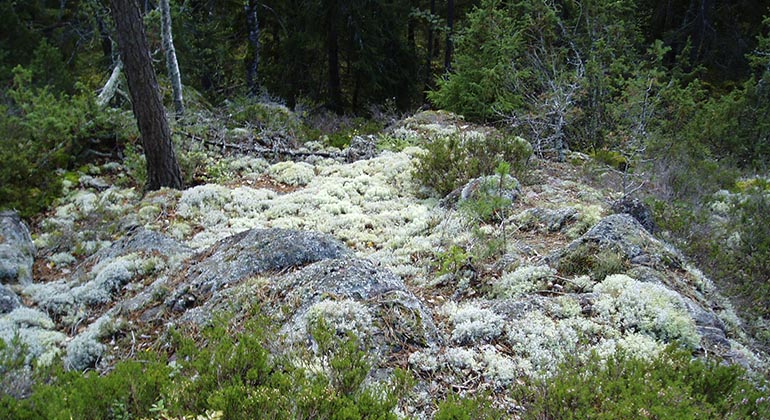
When the ice sheet retreated 10,000 years ago, a large sea was formed by the meltwater of the ice, the Yoldia Sea. The shoreline reached far up on the present Skåleklint. This boundary is called the highest coastline and is today about 140 meters above sea level. The waves worked the loose material and washed out the gravel and sand. This fine-grained material is found today in the lower part of the fault and on the banks of Lake Tisaar. What remained were the larger stones that were ground round against each other, just like on today's sea shores. These shorelines can still be seen today in the form of treeless fields of stones, known as shingle fields. The clearest examples are on the northern slope of Skåleklint.
Skåle farm - the farmer's landscape
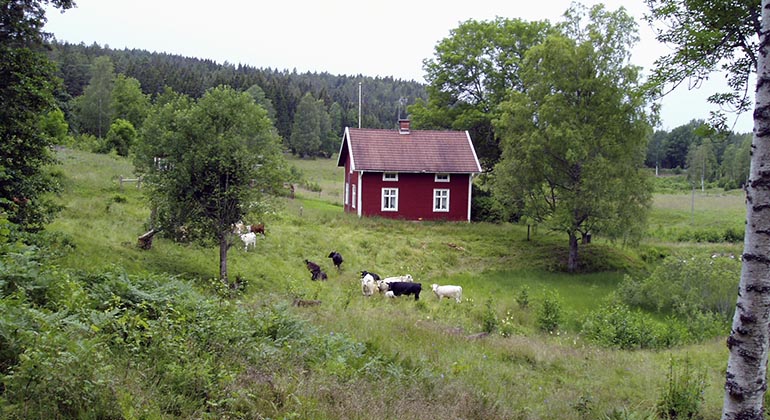
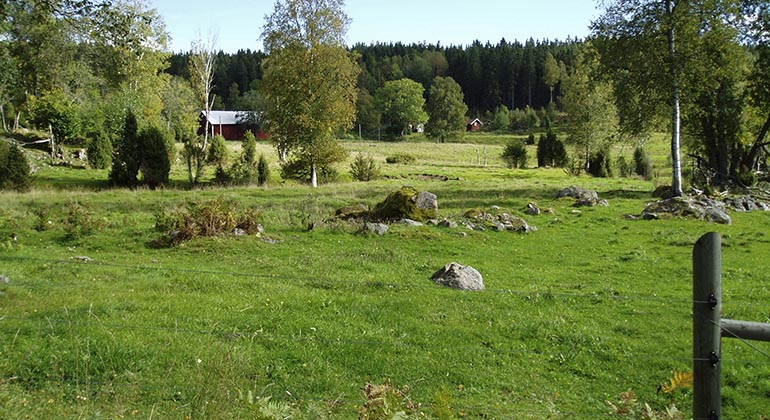
In the depression below the cliff there are finer-grained soils that were suitable for early cultivation. Skåle farm is mentioned in writings as early as 1556 under the name "Skårda", which refers to the sharp slope. The shape of the landscape set the conditions for agriculture. The fields became small and patchy. Small-scale farming was practiced on the farm until the late 1960s. Skåle farm includes a red-colored farmhouse with a 1930s character, a timbered outbuilding and a larger barn. Several house foundations are located near the farm, reminiscent of the farmers' need for many buildings that fulfilled different functions. Much of the old farmland is still kept open today. Many typical meadow plants thrive here today, such as cat's-foot, haymaking, briar, maidenhair fern and snake's-foot. Along the road down to the lake, some fruit trees and cherry trees show the site of the demolished croft Skålestugan.
Skålegruvorna
Iron ore has been mined in Skåle since the Middle Ages. For a time there was also a smelter where the ore was smelted, but it was probably closed down in the 16th century. In the 17th century, the mines belonged to Skogaholm's mill and the ore was transported to the mill's blast furnace in Östra Å. Mining continued until well into the 19th century. The path up to Skåleklint passes a number of mine holes, scree slopes and spoil heaps (scrap stone from mining). The so-called Skåle mines consist of about 30 mine holes gathered in a small area at Skåleklint
Mosses and salamanders
The Skåle nature reserve is home to a varied plant and animal life. On sunlit debris and rock shelves there are plants that do not normally thrive this far north, such as bloodwort, lesser celandine, hillbilly and leafy bindweed. Many different mosses, such as green shield moss and dark house moss, thrive in the damp rift valleys. The rare great crested newt thrives in the bowl pond and some of the mine holes. They are easiest to see in spring and early summer, when the adult salamanders spawn and lay their eggs in the water. On warm early summer evenings, the nightjar can also be heard over the pine moors of the cliffs, sounding like a whirring sewing machine.
Restoration of pastures
In the fall of 2021, some areas in the reserve were felled and cleared to recreate more of the previously cultivated agricultural landscape. We have removed spruce plantations on some old fields and thinned in the pine forest north and east of the tent meadow and in the birch forest below the cliff at Skåle farm. Later on, these felled and thinned areas will be fenced in and become part of the existing pasture, where the cows will take over the management. The grazing and increased sunlight will create favorable conditions for a range of plants and fungi that previously thrived here. We also plan to burn some areas north and east of the tent meadow before fencing is put up, to get rid of rice after the felling and renew the ground's berry rice. The burning will take place in summer 2023 at the earliest. The restoration has been carried out in collaboration with the landowner Sveaskog. We hope you will forgive the fact that it may look a little messy for some time to come.
Restored wetlands
Wetlands and small bodies of water used to be a common sight in the landscape but are now an unusual sight. Drainage and ditching drained former wetlands to create more arable land or grow more trees. New excavations in the nature reserve in the early 2020s recreated former wetlands, meandering streams and small waters with teeming life.
Accessibility
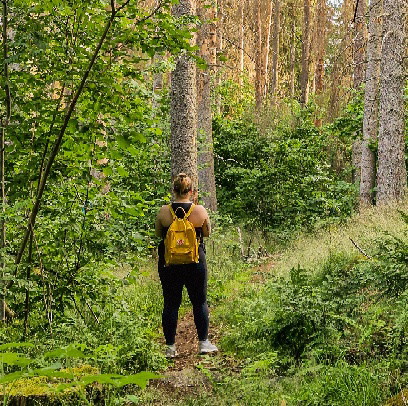
There are several marked trails in the nature reserve. Starting from Sandviken school, you can walk through the forest, pass Skåle cliff and eventually come down to Skåle farm. The path passes several mine holes, the larger of which are fenced. Parking is available both in the northern part of the reserve and at Skålestugan in the western part of the reserve, where it is also possible to camp. There are several picnic areas and fireplaces in the area.
Bring your own firewood!
At the moment, we do not have the opportunity to provide firewood for the fireplaces. Are you going to grill or make coffee over an open fire? Don't forget to bring your own firewood or coal.
Sign language information
Activities And Facilities
- Nature reserve
Facts
Municipality: Hallsberg
Year established: 1979
Area: 103 hectares
Landowner: Sveaskog AB
Manager: County Administrative Board
Reserve creator: County Administrative Board
Natura 2000: parts of the area are part of the EU's network of protected nature, SE0240111 Skåle
Directions
From Hallsberg drive east on the road towards Pålsboda. Turn south at Ålsta and drive towards Skogaholm follow the road signs to the reserve. From Svennevad, turn towards "Skogaholm 8". Then follow the road signs to the reserve.
Regulations
In the nature reserve it is forbidden to:
- damage soil or vegetation
- picking flowers or damaging herbs or lichens by picking or digging
- drive motorized vehicles other than on the main thoroughfare and into the two parking lots
- park cars, caravans (including motorhomes) or trailers and camp other than in designated areas for a maximum of two consecutive nights
- light fires other than in designated areas
- ride horses
- put up posters, signs or similar
- disturb other visitors with radio, tape recorder or similar
Contact
Email address
Organization logotype

Please be aware that some of these texts have been automatically translated.
I’ve been here 12




I want to go here 5

Questions & Answers
Ask a question to other Naturkartan users.
Reviews
1 review
- 5 :
- 4 :
- 3 :
- 2 :
- 1 :

utsikten är magisk, speciellt i kvällssol!