
-
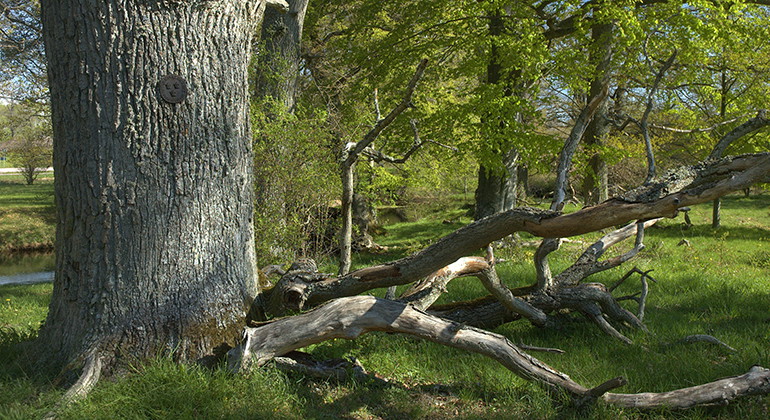
Foto:Tomas Järnetun -
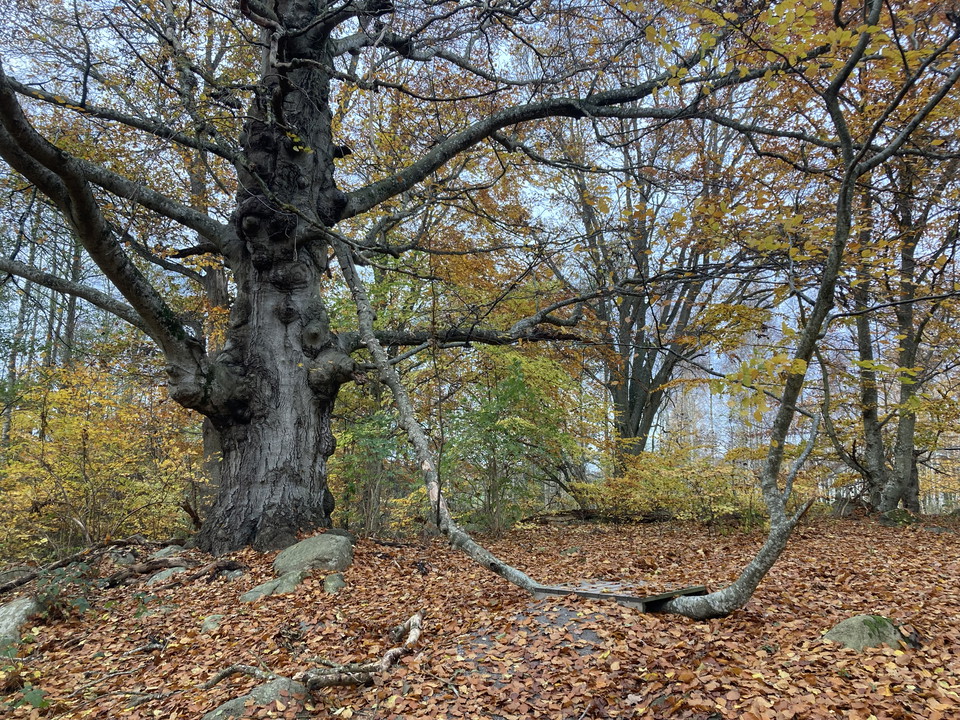
Photo: Michael Tholin
Värnanäs, Naturreservat
- Nature reserve
- County: Kalmar län och Öland
Actions
Description
Värnanäs is one of northern Europe's finest oak landscapes. It is home to a large number of old oak trees with a wide range of threatened species associated with them. The nature reserve also has grazed coastal meadows and extensive wetlands that further contribute to the area's species richness.
Preserved oak landscape of the highest class
In Värnanäs, the diversity of nature is interwoven with the history of the area. In 1553, Gustav Vasa had a breeding farm established in Värnanäs. After that, the estate was owned for many centuries by the nobility, who used the land for grazing and haymaking. In the open landscape, oaks could grow into mighty trees with wide crowns and thick trunks. Today, the old trees are home to a wide range of unusual species. Larger oak landscapes with old trees, such as these in Värnanäs, are now found in only a few places in Europe.
The oak - a home for many
The oak tree is home, shelter and pantry for around 1800 species. Among them are many different insects, lichens and fungi. Put simply, the older an oak is, the more and more demanding species can move in. An old, rough oak offers many different habitats, such as rough bark and decaying wood.
Tree giants
In the southern part of the reserve stands the Stufvenä Oak - one of Sweden's largest oaks. But Värnanäs is not only impressive with its mighty oaks. There are also beech trees and other species that are old and coarse. In total, there are around 750 trees of conservation interest in the reserve. These include a large willow by the Halltorpsån river with a circumference of 450 cm and a wild apple with a circumference of 300 cm. Both are among the largest of their kind in Sweden.
Diversity in a varied nature
The reserve's old trees grow in both pastures and forests. Alongside these habitats, grazed meadows and shallow bays are also protected. These environments attract many different birds. A number of interesting plants can also be seen in the coastal meadows, such as red sedge and sea nettle. Halltorpsån, which flows through the reserve, is bordered by wetlands and swamp forests, other valuable habitats with a rich diversity of plants and animals.
Activities And Facilities
- Nature reserve
Facts
Decision year: 2023
Area: 344 hectares of which 340 hectares is land
Municipality: Kalmar
Landowners: Individuals
Manager: Kalmar County Administrative Board
Regulations
In the nature reserve you are not allowed:
- park your vehicle, caravan or trailer anywhere other than in designated parking spaces.
- camp for more than one day in the same place
- moor or anchor a boat in the same place for more than 24 hours
- harming or disturbing mammals and birds, climbing nest trees or being close to birds of prey nests, dens or burrows
- bring a dog, or other animal, that is not on a lead
- burn fires in places other than designated areas
- breaking branches, felling or damaging living or dead trees or bushes.
If you have received permission from the County Administrative Board, you may
- pick mosses, lichens or woody fungi
- dig up vascular plants
- set traps to collect insects that are then killed
- use the area for sports competitions and events
- putting up a sign, board, poster, art object, orienteering control, cordon, marker or similar.
Remember that hunting may take place in the nature reserve.
Full regulations
Reserve regulations
C. Regulations for the public according to Chapter 7, Section 30 of the Environmental Code on the right to travel and stay in the reserve and on order in general within the reserve.
It is forbidden to enter the reserve:
- park motor vehicles, caravans or trailers other than in the designated place.
- conduct military training activities.
- Camping for more than one day in the same place.
- Mooring or anchoring a boat for more than 24 hours in the same place.
- Damage or disturb mammals and birds, climb trees or stay close to a bird of prey's nest, lair or pot.
- bring an unleashed dog or other pet that is not leashed
- make a fire other than in a place specifically designated by the County Administrative Board
- Break branches, cut down or damage living or dead trees or bushes.
It is forbidden to do so without the permission of the County Administrative Board:
- pick mosses, lichens or wood-living fungi
- digging or pulling up vascular plants
- collect insects or other invertebrates with traps that kill.
- conducting a sports competition or event
- placing a sign, board, poster, art object, orienteering control, cordon, marker or similar.
Regulations C 3, C 4, C 7 and C 15 do not apply to property owners, agricultural tenants, holders of fishing rights and holders of hunting rights.
Regulations C 5 to C 6 do not apply to holders of hunting rights when hunting.
Contact
Email address
Per Markus Jönsson
Organization logotype
Please be aware that some of these texts have been automatically translated.
I’ve been here
I want to go here
Questions & Answers
Ask a question to other Naturkartan users.
Reviews
0 reviews
- 5 :
- 4 :
- 3 :
- 2 :
- 1 :