Emmaboda kommun
Välkommen till Emmaboda kommuns fantastiska nat...

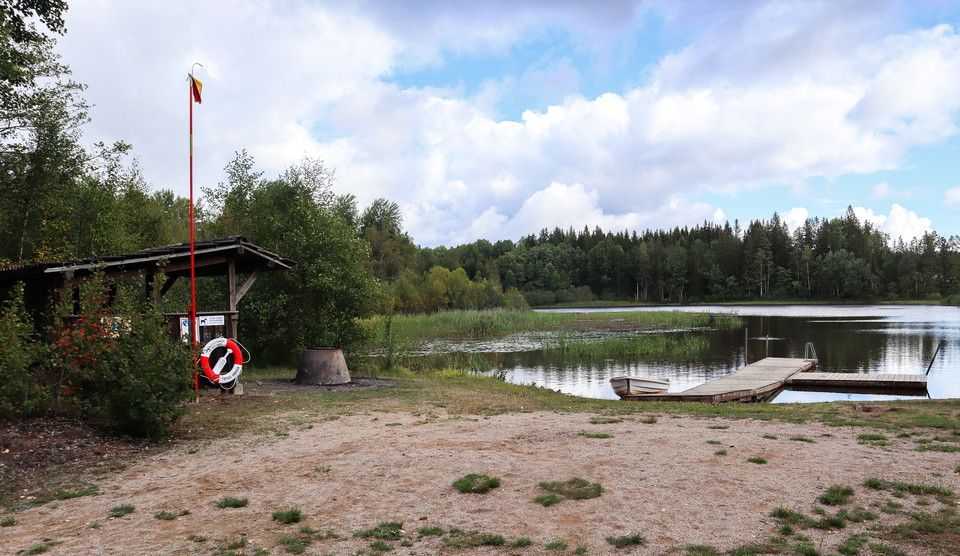
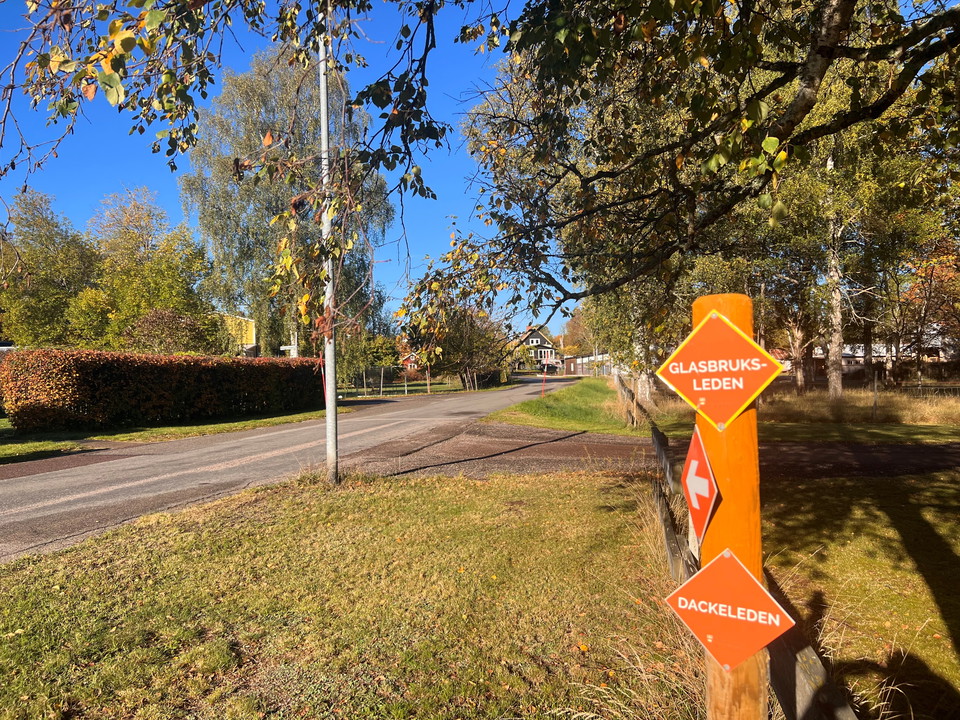
Here begins the Glassworks Trail in the community that got its name from the owners of the ironworks that started on the site. In 1725 they lent parts of their surnames, Fle etwood, Ro thlieb and Hopp enstedt. Remaining from the iron and glassworks era are several noteworthy buildings along the Ljungbyån river that flows through here.
The name was probably formed from the personal name Öjer or Öjar together with måla (which means new cultivation). Settlement in the village began in the late Middle Ages or early 16th century.
An enigmatic name that is somehow connected to the Flemming noble family, who came from Belgium to Sweden in the 15th century. A tradition in Madesjö claims that a Flemming was the commander of Kalmar castle and had the crew of a boat that was wrecked in the Kalmar Strait settle in this area, which was then called Flemmingeland.
Flemmingeland's chapel with its freestanding bell tower dates from the 1930s.
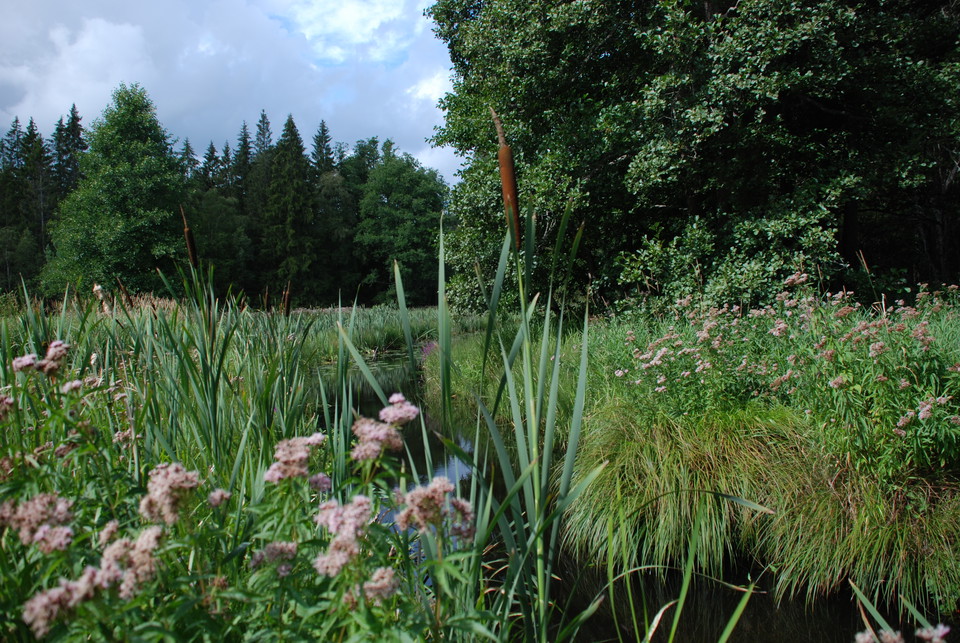
The river, which has a very crooked course, divides into two main channels with several transitions and parallel flows. Along the river there is swamp forest land with coniferous, mixed and deciduous forests that alternately follow the route.
Ljungbyån flows through Flygfors, a typical mill community with glassworks buildings from the turn of the century and detached houses near the mill environment.
Glass preceded iron production here in the 18th and 19th centuries. In 1726, the ironworks started on the grounds of Orranäs manor. In the factory environment, the blacksmiths' homes and the hammer forge remain from the ironworks era. Glass production began in 1896 and several buildings were added at the turn of the century. The Vapenbäcksån river flows through the mill area and forms a pond at the mill.
Next to the trail, at Drottninghult, there is a peat bog where peat was mainly collected during the war years. There was a shortage of fuel in the country when they started collecting peat on a larger scale. Shovels were used to cut up mud, which was then ground into mud strands and cut into pieces. The peat pieces were then left to dry in the sun on the bog.
The farm was a manor in the middle of the 17th century and belonged to the infantry at the end of that century when it was called a knight's residence. At Trolleboda there is an unusually large beech along the road.
West of Trolleboda is Åslahult, where there is a remarkable gristmill that the local history society in Hälleberga looks after.
The place name is pronounced in our time "gräne" which means spruce forest. In the 1390s Queen Margaret bought the Gränö estate. In the early 1800s there were twelve crofters and a boatman in the relatively large village. The stream that flows through here is called Gränöbäcken.
This village is one of the new settlements that were established in the 1580s. Around the same time, settlement began in Kåtterås, which borders Norketorp. There is an exception cottage here, the kind that people were allowed to live in "on exception" in the Eel Age.
Along the trail there are two protected oaks growing on the oak hill in Norra Björnahult. The village was formed in the Middle Ages and the name can be interpreted as björnskogen or Björns skog. In the village there is a beautiful loft with a protruding upper floor and beautifully carved ornaments.
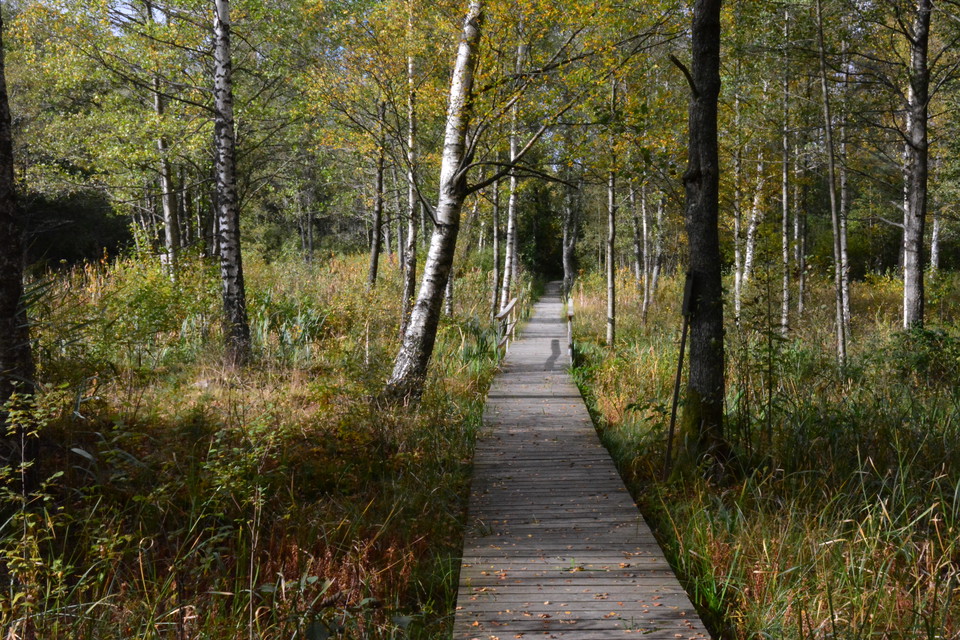
Along the trail on the way to Bodajsön there are wetlands on both sides. The trail ends in the mill community of Boda. Here you can visit the glassworks, which has several noteworthy buildings along the mill street.
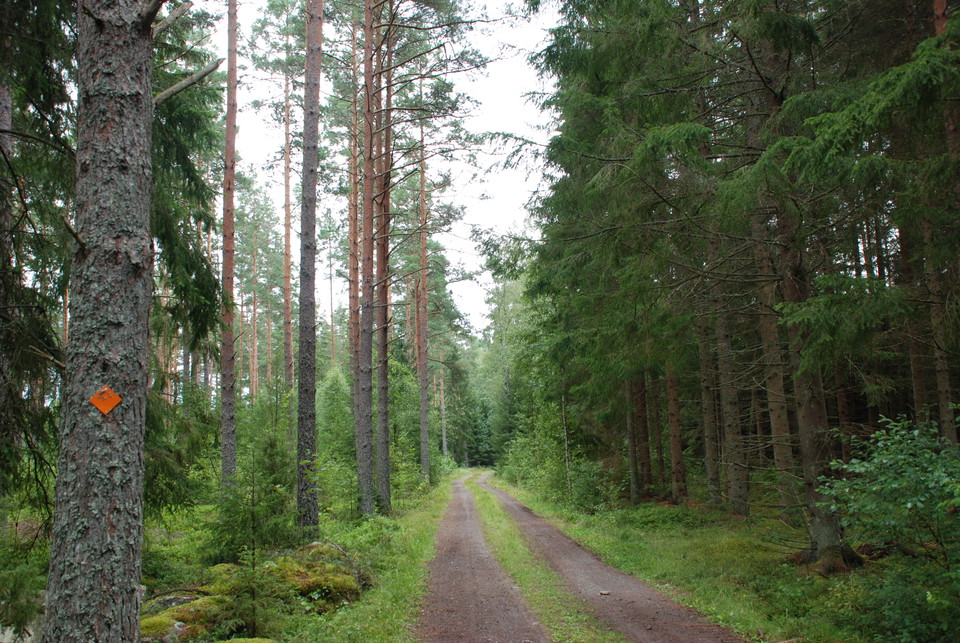
Leden går på varierat underlag mellan asfalt, grusvägar och stigar i skog.
Samhällsbyggnadsförvaltningen
Please be aware that some of these texts have been automatically translated.


Ask a question to other Naturkartan users.
0 reviews