
Munkaskog
- Culture
- County: Jönköpings län
- 248.45 km away from you
Actions
Description
Building near the shore is popular today, but if you look at where farmers placed their farms on the west side of Lake Vättern, you discover a different pattern.
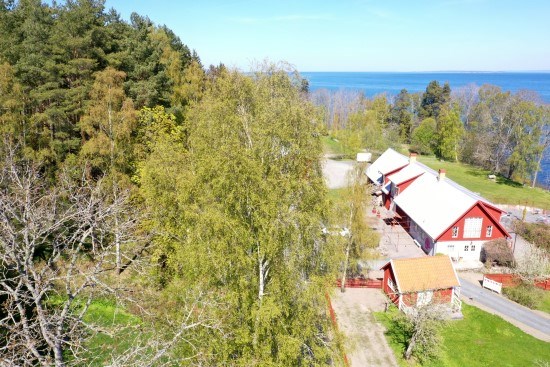
The better agricultural land was usually at a good distance from the shoreline, so they chose to establish villages and farms on the heights. Thus, it was not the view of the lake that was important, but where the arable and meadow land was located. A clear exception to the above rule is the village of Munkaskog northeast of Habo. Here, the village and the arable land are located on the slopes down towards Lake Vättern.
The name Munkaskog sounds as if it is connected to the monastery system in the Middle Ages, and this is true. The first record of the place name is from 1539: "Monkaskog". The name indicates that the property was owned by a monastery. It was a wooded area that was donated to Varnhem Abbey as early as the 13th century.
In many parts of present-day Habo municipality, agriculture did not yield such a good return, and this led to people being happy to engage in other industries. Sometimes these were small-scale secondary incomes, but sometimes the industries alongside agriculture were of the greatest importance. The proximity to Lake Vättern favored these industries and, for example, fishing became an important source of income for some.
Sea transport was also important and often easier than road transport. A significant change in shipping on Lake Vättern occurred with the opening of the West Göta Canal in 1822 and the East Göta Canal 10 years later. At that time, both the number of ships and the size of the tonnage increased explosively. As a result of this, the port of Jönköping, for example, was developed, but the more intensive maritime transport must also have benefited small-scale maritime transport. Many loading berths with piers were located along the shoreline in the current Habo municipality.
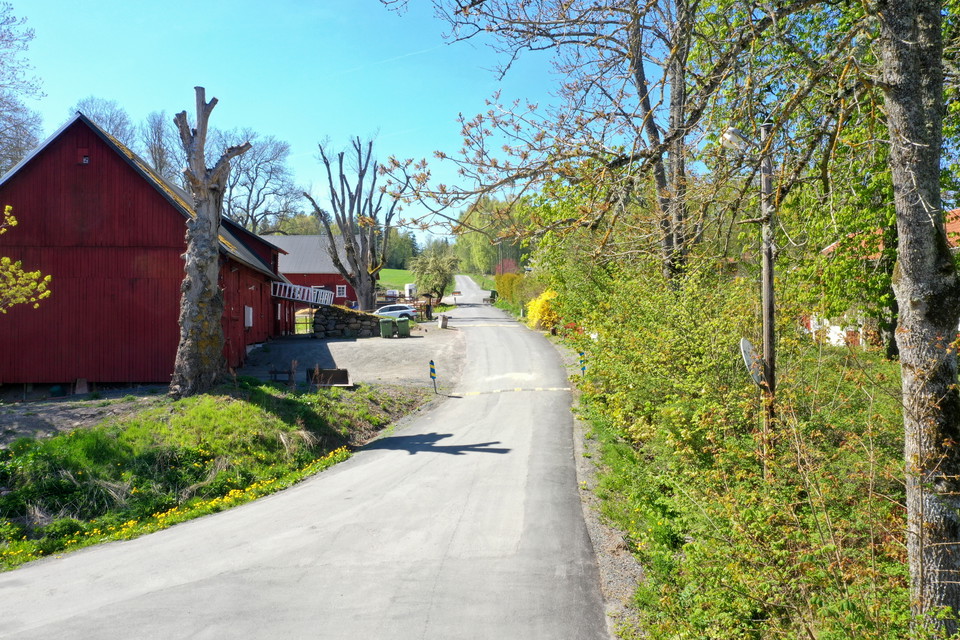
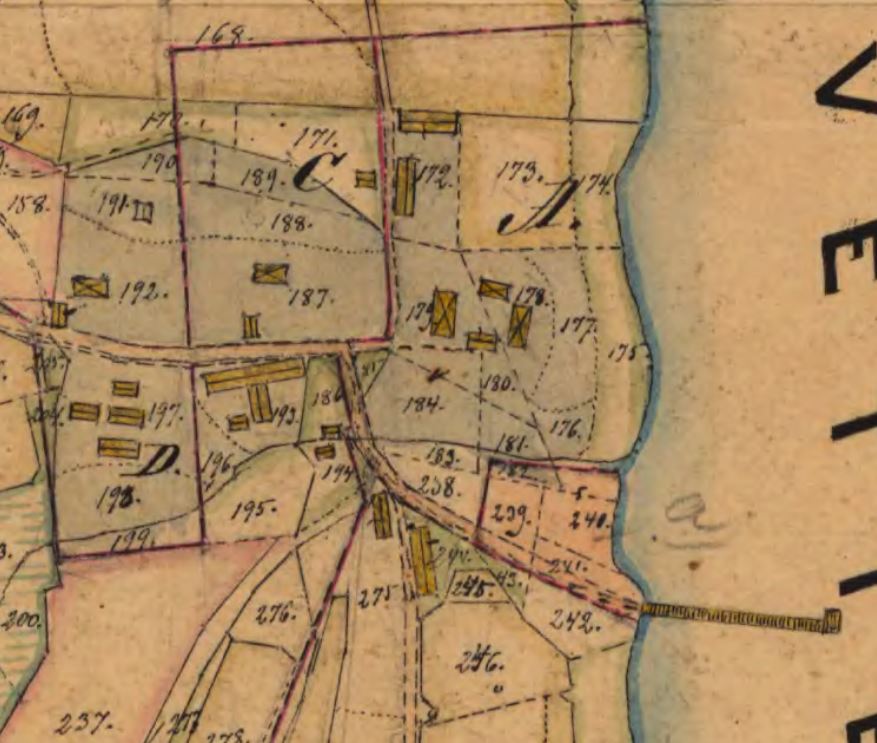
One of these loading places was located in Munkaskog. When the land was parceled out here in 1900-01, it was decided that the east-west road down to the jetty would be made wider than other roads in the village. It was made 6 meters wide compared to the other roads with only 4 meters width. The jetty in Lake Vättern was at this time about 70 meters long. The village consisted of four homesteads at the time of the transfer, and when the village's properties received new boundaries as a result of the transfer, it meant that the homesteader Per Bohman's farm had to move out of the old village center, almost 1 km south. As compensation for all the work involved in moving his building, the other co-owners in the village had to provide Bohman with financial compensation.
One of the farms in Munkaskog was a so-called hospital farm. This meant that the yield or rent paid for the care of the sick or poor.
Activities And Facilities
- Culture
Directions
Directions
The village of Munkaskog is located northeast of Habo. There is a road sign along county road 195 indicating the turnoff towards Munkaskog. The village is about 1.5 km east of road 195.
Contact
Email address
Kultur- och fritidsförvaltningen i Habo kommun
Organization logotype

Please be aware that some of these texts have been automatically translated.
I’ve been here
I want to go here
Questions & Answers
Ask a question to other Naturkartan users.
Reviews
0 reviews
- 5 :
- 4 :
- 3 :
- 2 :
- 1 :