
Kråkerydsgravfältet
- Culture
- County: Jönköpings län
- 250.34 km away from you
Actions
Description
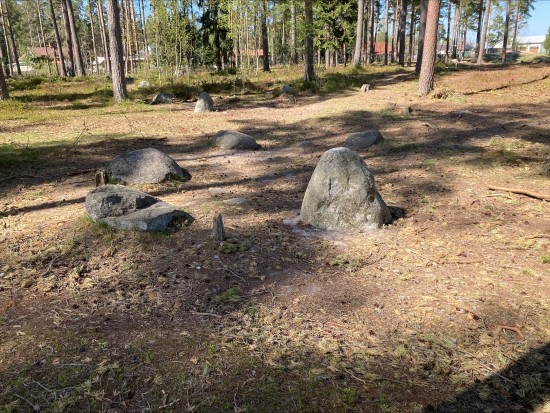
From the time around the birth of Christ and about 600 years onwards, i.e. during the period known as the Roman Iron Age - Migration Period, it was common for graves to be marked with upright stones or stones arranged in circles such as squares or circles.
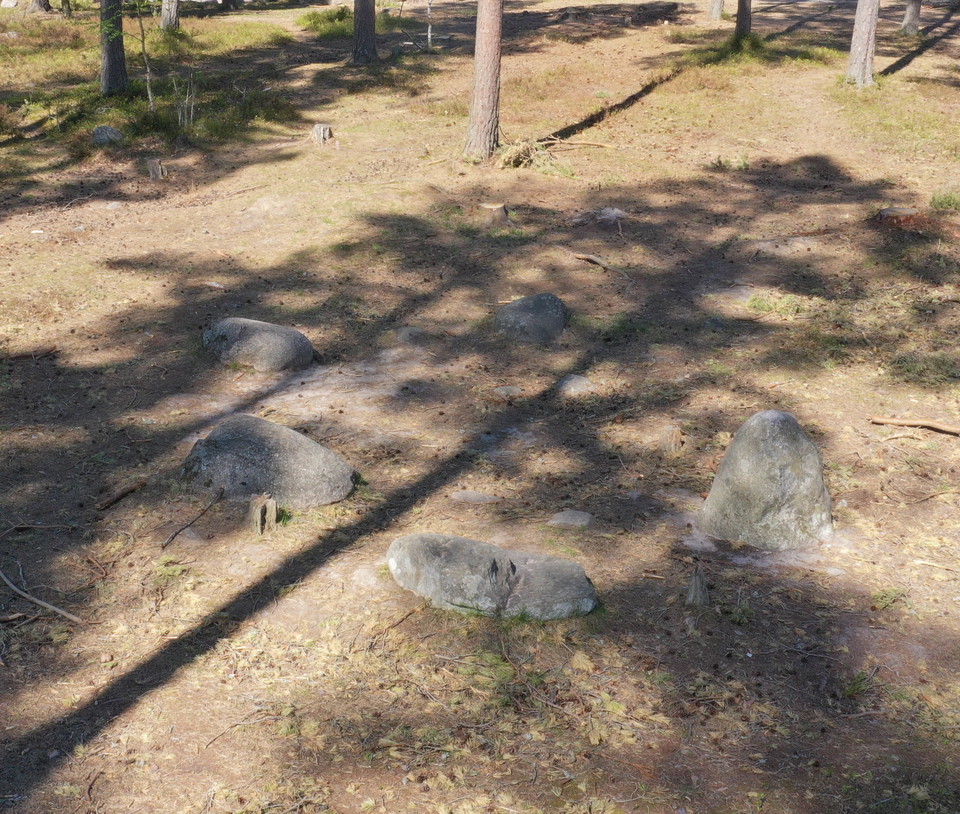
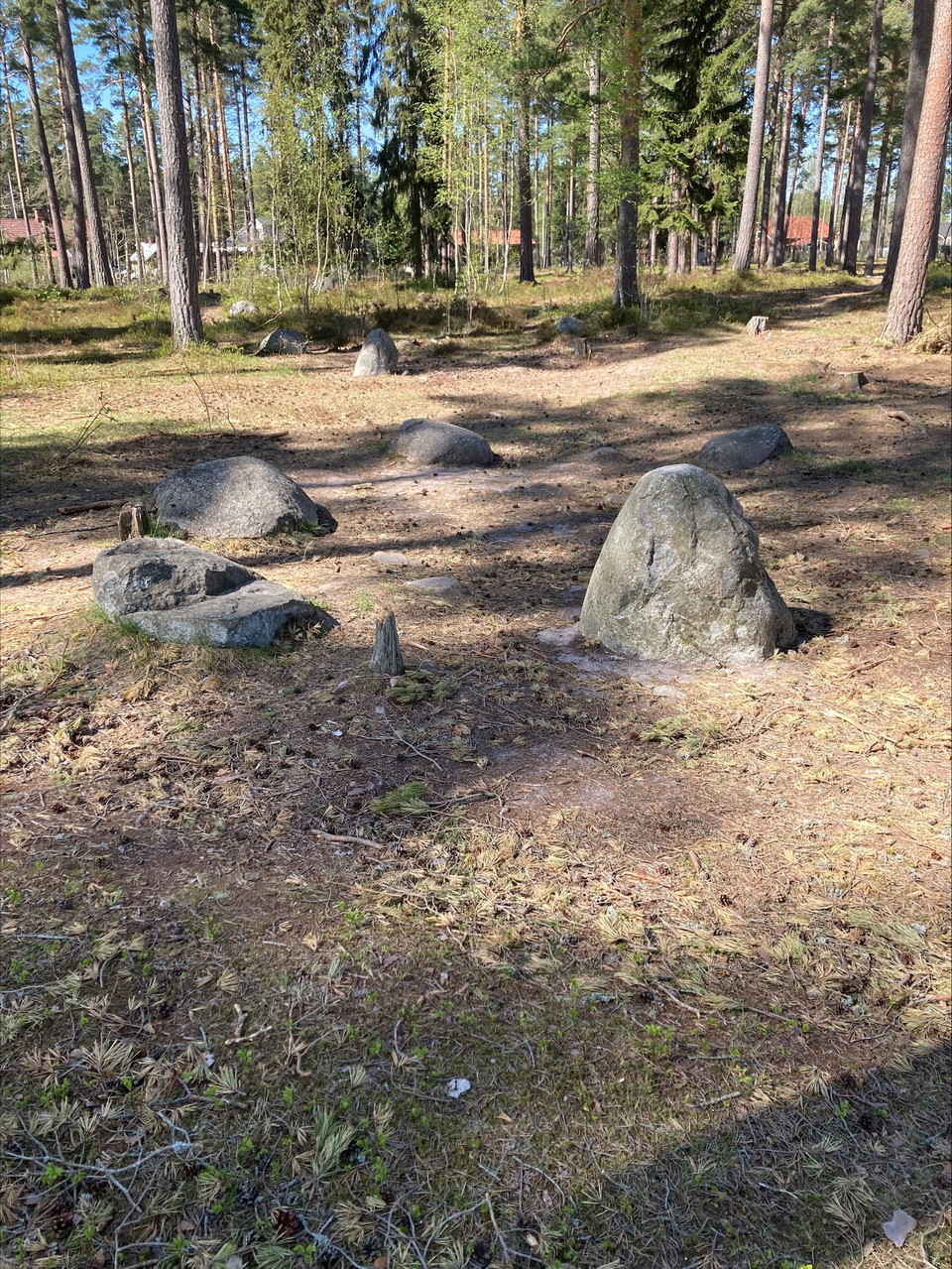
In burial grounds from this period, the combination of stone circles, solitary standing stones and a few stone circles is common. Stones that stood in a circle were popularly called judge's rings because it was imagined that the magistrates and the judge sat on separate stones when they held court in earlier times. If you think about it, you realize that it must have been both uncomfortable and not least cold to sit on the stones during autumn and winter court sessions. It was not until the first half of the 20th century that archaeologists were able to prove with certainty that the cathedral rings were in fact prehistoric graves.
The larger, visible stones in the doom rings or square stone circles were sometimes bound together with smaller stones, but these are hardly visible today, as they lie under the turf. The dead were usually burnt on funeral pyres and there were few grave goods. It was the monument itself that showed the status of the dead person in life.
The burial ground, L1972:5026 in Fornsök or Kråkerydsgravfältet, is in its entirety quite damaged. Small pits in the ground suggest that a large number of stones have been removed, perhaps to be used as building material. There are fifteen identified graves in the cemetery: eleven doom rings, three standing stones and one round stone. In addition, there are 23 lump stones that could not be assembled into graves, but it is likely that several of the lump stones were in fact part of stone circles.
In 1982, Skaraborgs museum (now Västergötlands museum) in Skara carried out a limited archaeological survey of one of the domar rings. Prehistoric pottery was found in a collection of stones in the center of the ring. The deceased may have brought a vessel with food to the afterlife.
There are around fifteen prehistoric burial grounds in Habo municipality. The most common type of grave in the cemeteries is a ring of judges. In addition, there are many solitary doom rings, stone rows and standing stones in the municipality, which shows that the centuries after the birth of Christ were a dynamic time in the Habo area.
Activities And Facilities
- Culture
Directions
From road 195, head towards Habo N on Hjovägen. After about a kilometer, turn left onto Kråkerydsvägen and then left again onto Barrvägen. Park at the preschool Äventyret.
Walk the GC road east towards the grove of trees a few tens of meters. Here is the grave field. At the GC road is the sign with the QR code.
Center coordinates (SWEREF 99 TM)
N 6420069, E 445763
Contact
Email address
Kultur- och fritidsförvaltningen i Habo kommun
Organization logotype

Please be aware that some of these texts have been automatically translated.
I’ve been here
I want to go here
Questions & Answers
Ask a question to other Naturkartan users.
Reviews
0 reviews
- 5 :
- 4 :
- 3 :
- 2 :
- 1 :