
Fiskebäcks kapell
- Culture
- County: Jönköpings län
- 251.21 km away from you
Actions
Description
Fiskebäck was long a separate parish with its own church. It is assumed that a wooden church was built here as early as the 12th century. In the middle of the 16th century Fiskebäck was incorporated into Habo parish, but the church remained and was still used sporadically.
Next to the church was a detached belfry, which like the church was destroyed in a fire in 1623. A new wooden church was built under the direction of master builder Håkan i Gunnarsbo and was completed in 1639. Four years later, a bell was donated to the new steeple by Julius Kemmerer, who was the so-called hauptman (commander) of Visingsborg County. Kemmerer was knighted in 1649 under the family name Lantzenfelt.
Around 1780, Fiskebäck church was moved to the grounds of Lilla Flittered and rebuilt as Gustav Adolf's church. Despite this, the old cemetery in Fiskebäck continued to be used as a burial ground. Therefore, the bell tower was also left standing.
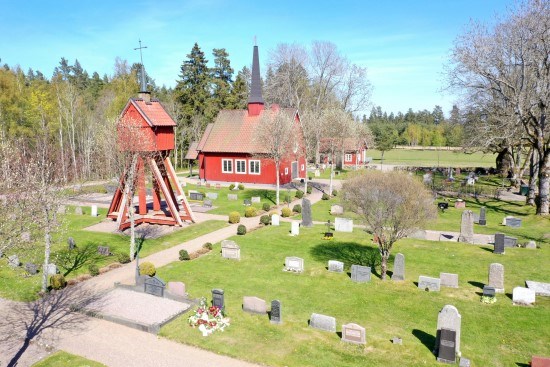
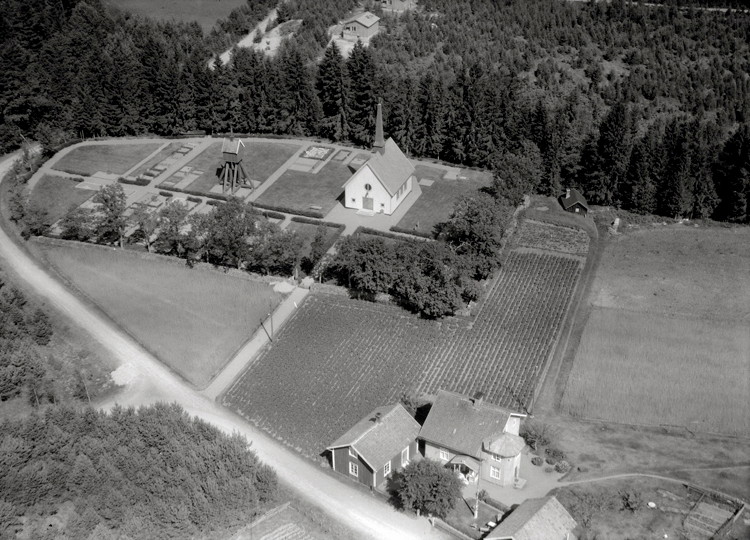
The maintenance of the cemetery was perceived as burdensome and this meant that the belfry fell into disrepair. The old belfry was dilapidated by 1853, so a new one was built. According to the decision of the church meeting, the stack was to be erected according to the drawings shown, to a maximum height of 10 cubits (about 6 meters). Furthermore, the wood from the old stack was to be reused.
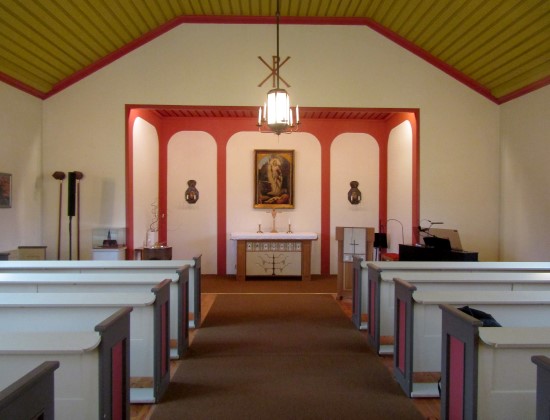
The current chapel building was erected in 1939. The drawings were created by the Stockholm architect Martin Westerberg, who had designed many churches in the country. Fiskebäck had then been without a church building for over 150 years. The new chapel was no ordinary church, but was intended primarily as a burial chapel. Although the building was built under functionalism, it has a traditional and retrospective character with, for example, a ridge turret with a spire and leaded windows. The facades were originally painted yellow, but have since become red.
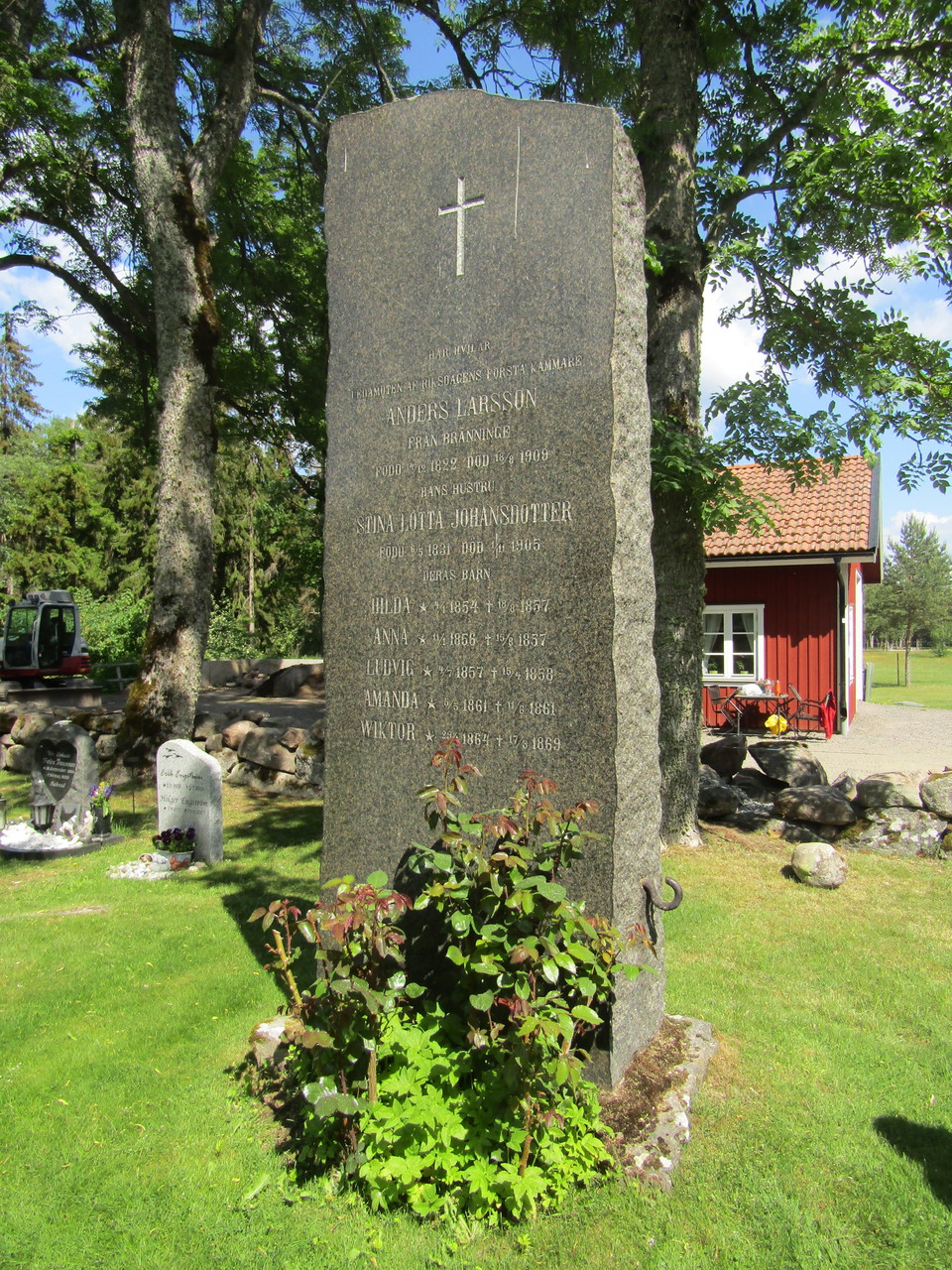
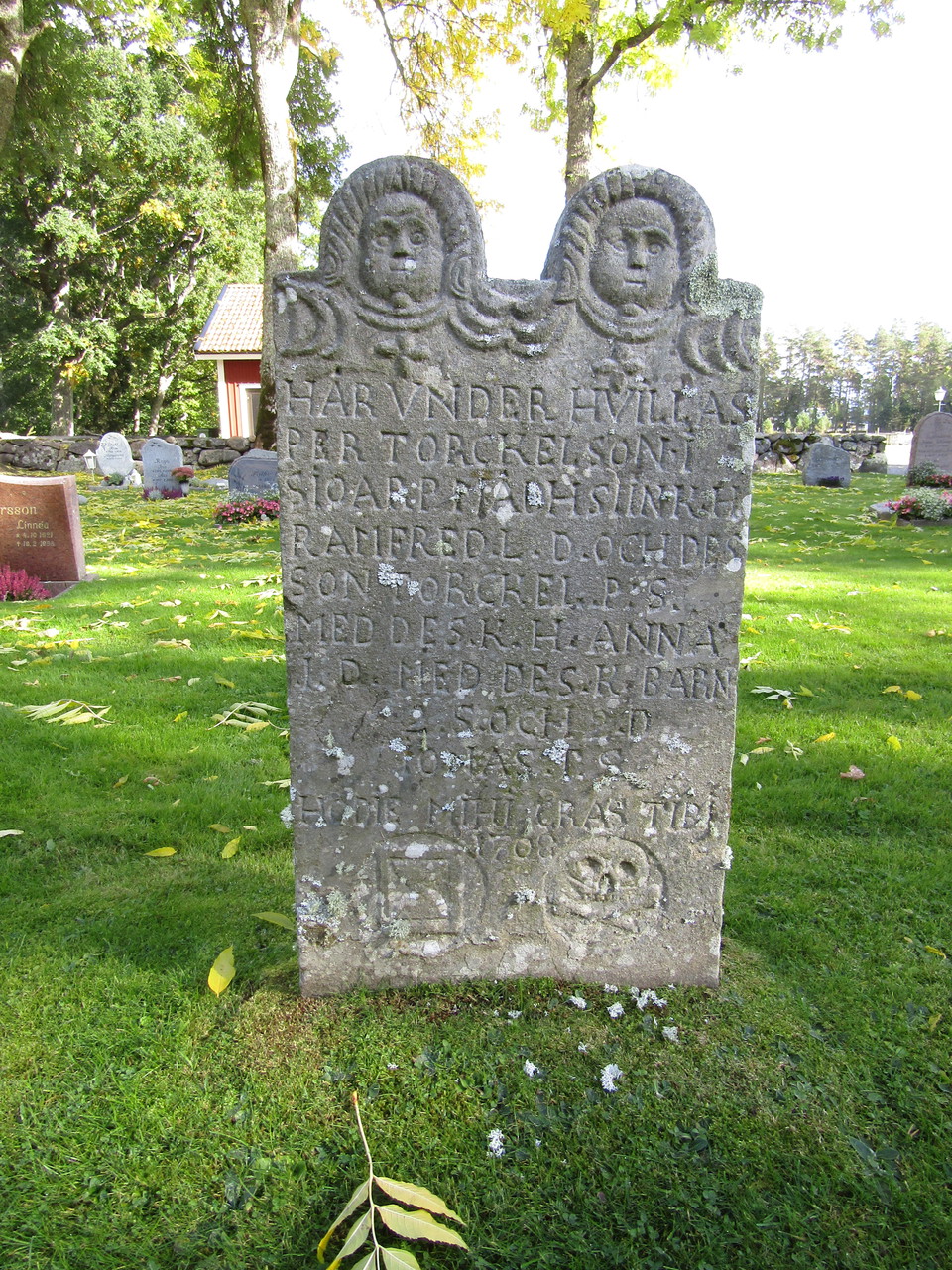
An essential part of the chapel complex that is easy to miss are the Lantzenfelt tombstones. Julius Lantzenfelt, as mentioned above, was an important person in the area. He lived at the manor Stora Kärr, which today is on the outskirts of Habo. His and his wife Dorothea Åkerstav's brick burial chamber is still hidden under the current chapel building. Their tombstones, on the other hand, are lined up and well protected at the northern gable of the chapel. On Julius Lantzenfelt's slab there are full-length depictions of the couple in lavish and modern clothes for the time. The wife's rock shows, among other things, the crucifixion of Jesus. In the mid-17th century, there were skilled stonemasons associated with Visingsborg on Visingsö, and it may be one of them who made the tombstones here in Fiskebäck.
Activities And Facilities
- Culture
Directions
Directions
Fiskebäck chapel is located just south of Habo. There are road signs along County Road 195 indicating the turnoff to the chapel. Do not confuse the signs that show the way to Fiskebäck's villa area.
Contact
Email address
Kultur- och fritidsförvaltningen i Habo kommun
Organization logotype

Please be aware that some of these texts have been automatically translated.
I’ve been here
I want to go here
Questions & Answers
Ask a question to other Naturkartan users.
Reviews
0 reviews
- 5 :
- 4 :
- 3 :
- 2 :
- 1 :