
-
-
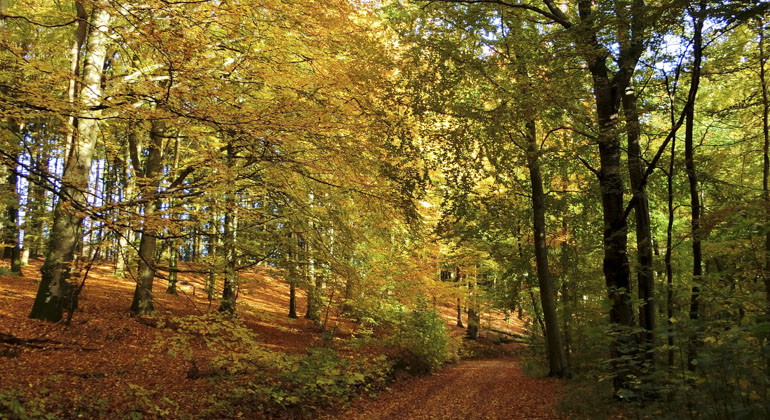
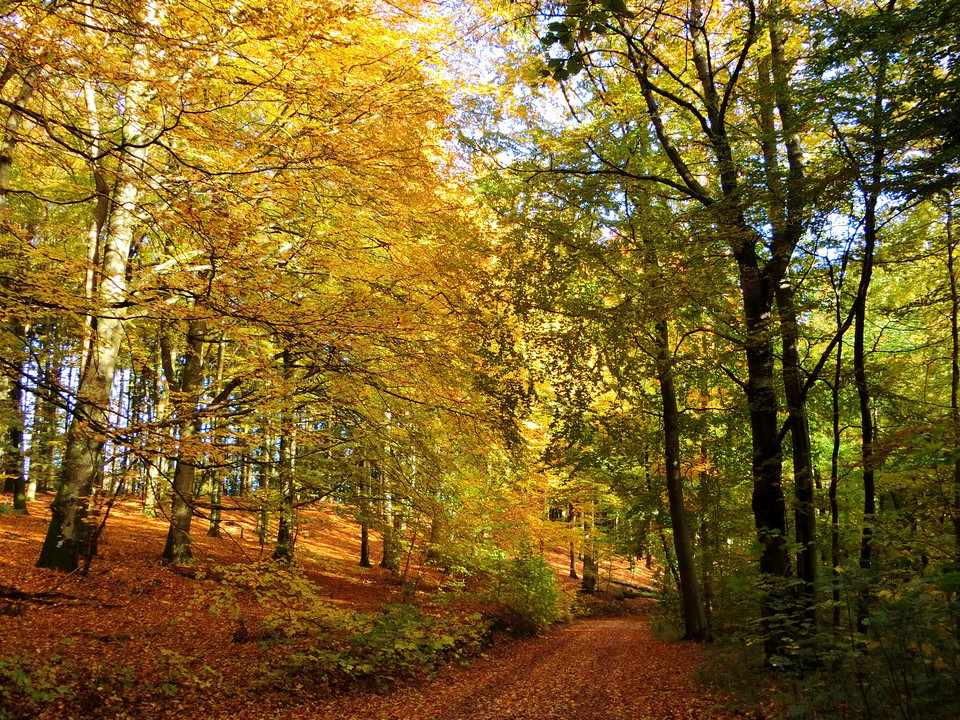
bokskogen i höstblom -
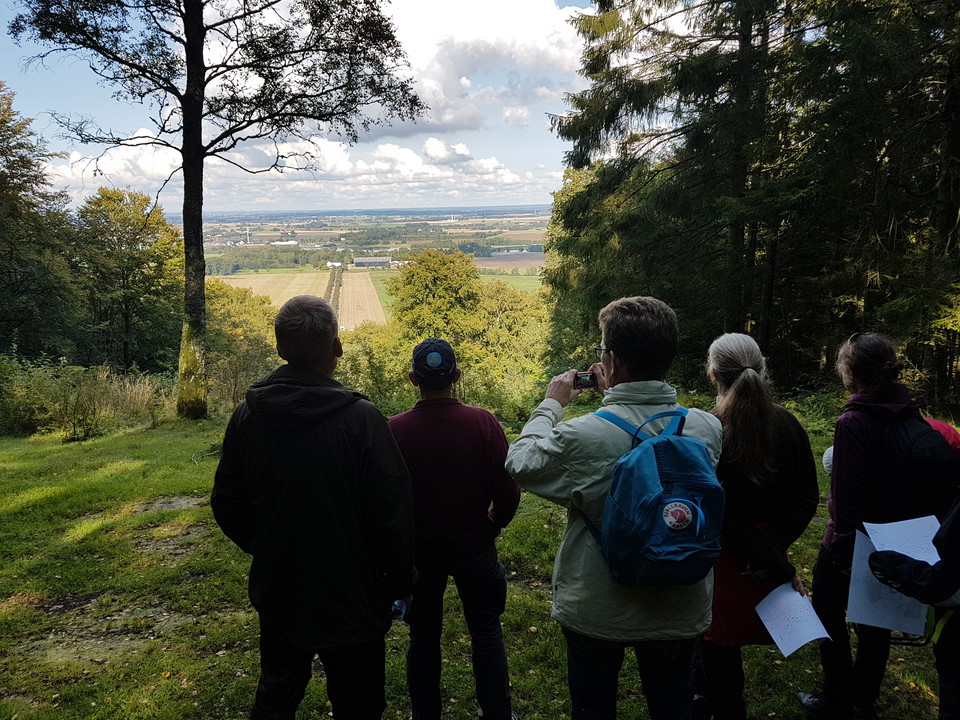
människor som står och inspekterar utsikten från åsen -
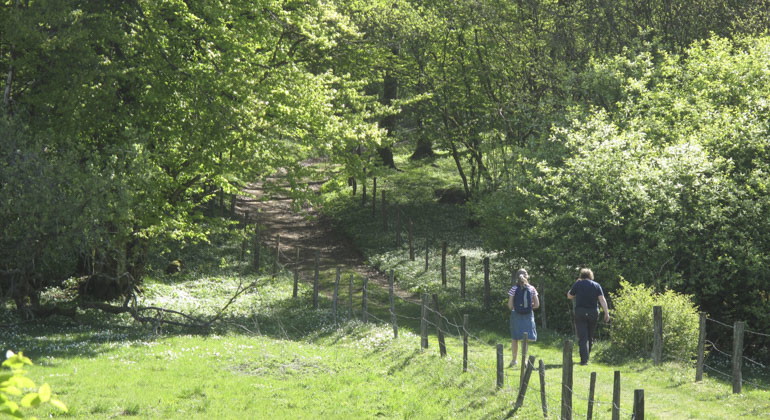
två personer som går på en stig mellan hagar i reservatet -
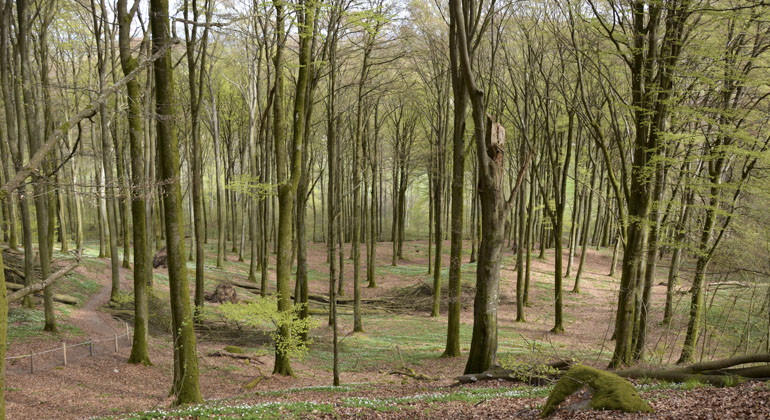
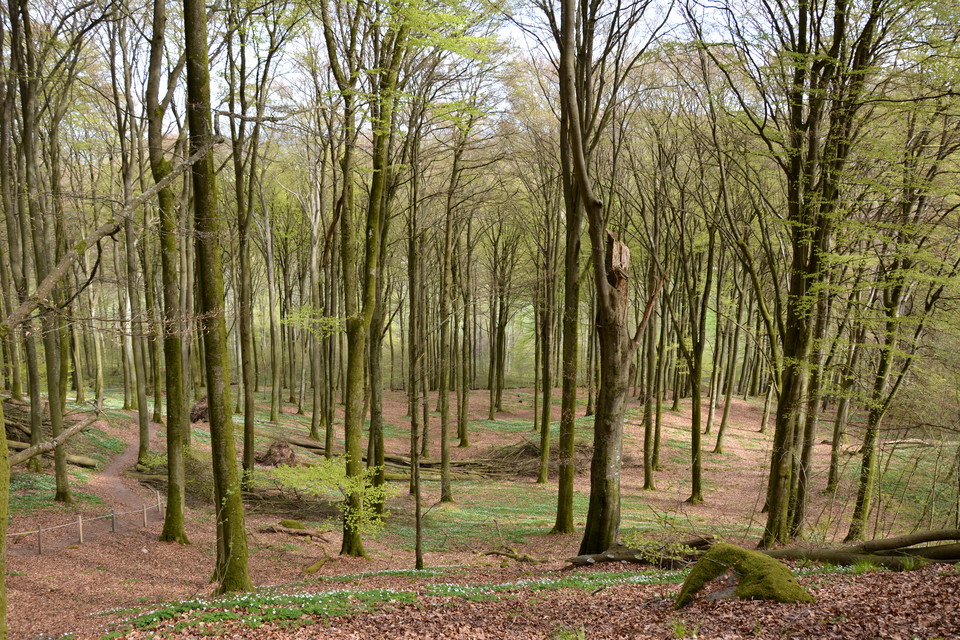
träd som står tätt -
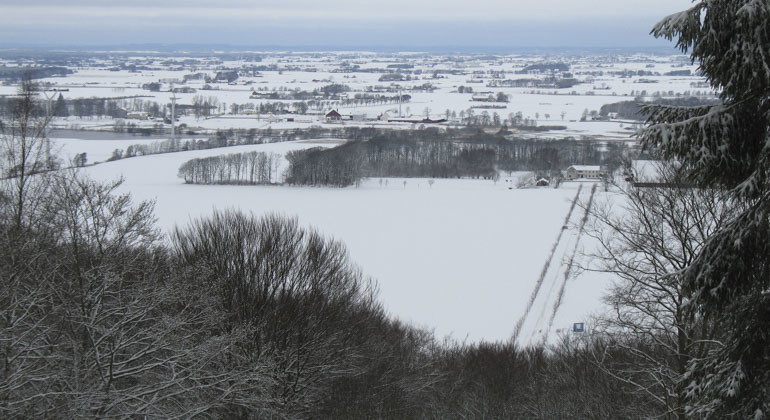
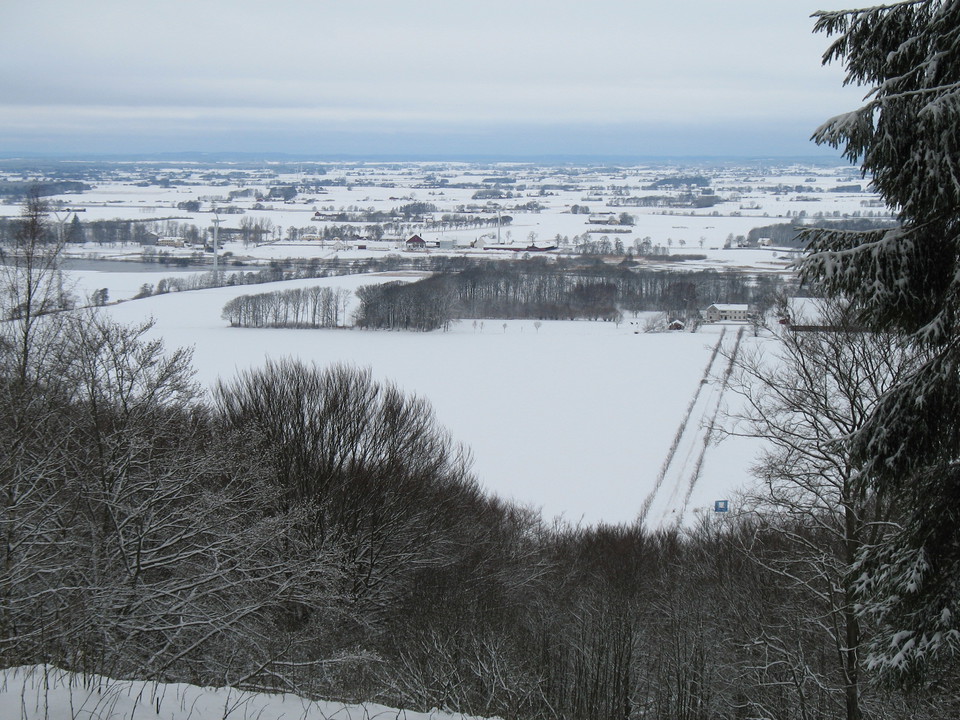
vy från utsiktsplats i reservatet på vintern med snö på åkrarna -
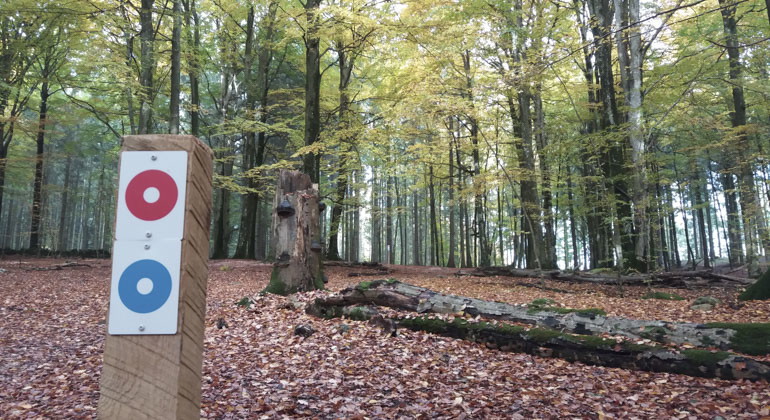
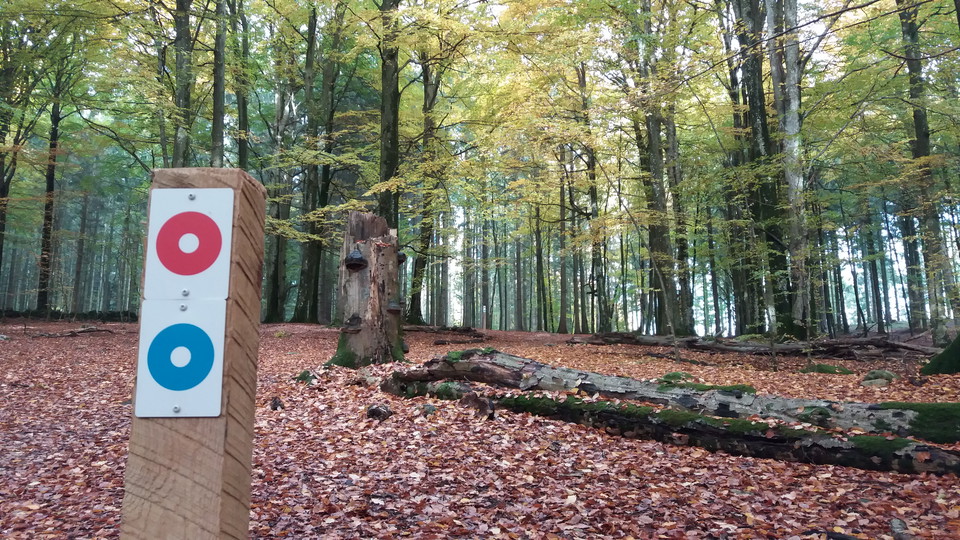
markeringen för röd och blå led -
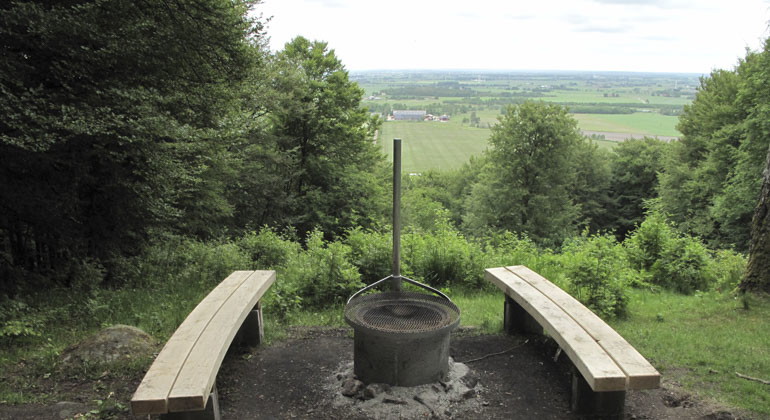
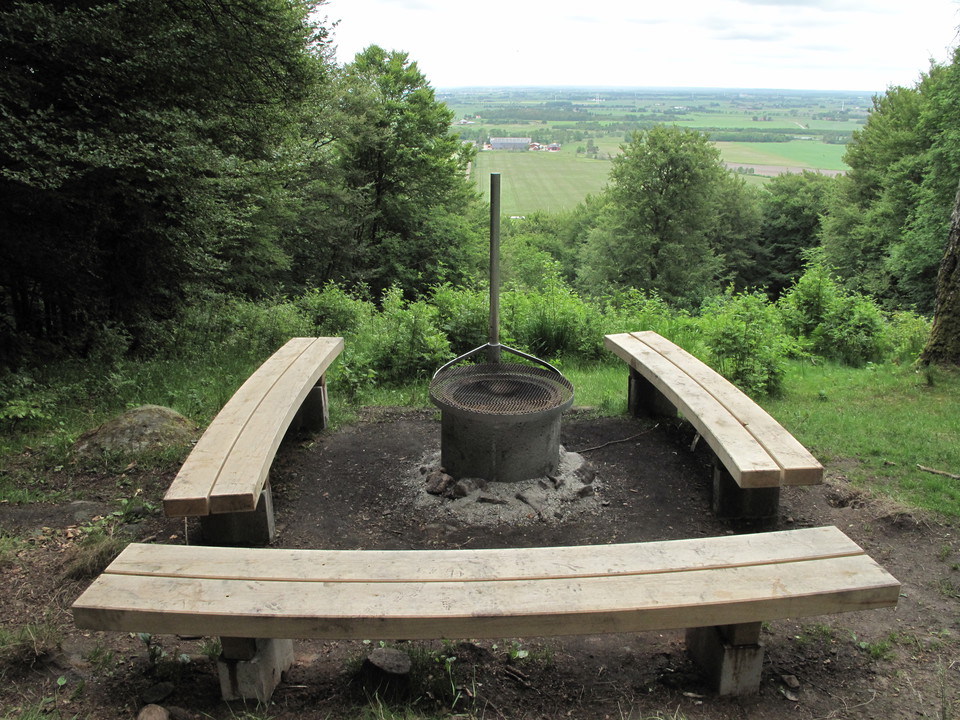
grillplats med utsikt -
-
-
-
-
Osbecks bokskogar, Naturreservat
- Nature reserve
- Wheelchair accessible
- County: Hallands län
Actions
Description
Osbeck's beech forests are perhaps at their best in the spring when the sunlight filters down through the light green foliage of the beech trees. But the reserve is worth a visit in all seasons and there are several marked hiking trails to choose from. In the forest you will find both rare mosses and various ancient remains.
Osbeck's beech forests are located on the northern slope of Hallandsåsen just next to the community of Hasslöv in Laholm municipality. This is where the flower king Linnaeus' disciple Pehr Osbeck worked as a priest in the second half of the 18th century. He had the grand ambition to learn as much as possible about theology, natural history and medicine.
Thanks to the fact that Osbeck diligently wrote down all kinds of discoveries and observations, we now know a lot about what the nature and the village around Hasslöv looked like during this time. From his home in Hasslöv vicarage, Osbeck could look out over the slope of Hallandsåsen and the surrounding plains. He saw a landscape very different from today. The meadows and fields down on the plain were much more wooded, with hazel, birch and gnarled old oaks. The beech forests of the ridge were lighter and characterized by the grazing of livestock. A chance to compare Osbeck's observations with today's conditions is given if you walk the so-called Osbecksrundan, an informative tour from the Bronze Age grave Lugnarohögen east of Hasslöv up the ridge to Brantekälla and back.
Trails and facilities
The nature reserve has many hiking trails of different lengths. It is possible to combine the trails to get a longer walk. Some of them have small information signs explaining the nature and history of the area. The trail between the central parking lot and the eastern barbecue area is suitable for people with wheelchairs, walkers or prams. The trail is paved but in some places the gradient is greater than the recommendations for TG trails, however these gradients are quite short. These loops exist:
- Blue loop - 4 km, in the western parts of the reserve
- White loop - 1 km, in the center of the reserve
- Red Trail - 2 km, a varied and challenging trail (the first 500 meters are accessible)
- Yellow loop - 2.5 km, in the eastern part of the reserve
- Osbecksrundan - 2.5 km, starting at Lugnarohögen
- Green loop - 3 km, moderately difficult with some steep slopes (new loop not included in the brochure)
More about the loops in the leaflet (as PDF) Link to another website
At the eastern barbecue area there are bench tables that are adapted for wheelchairs. The barbecue area is a short distance from the central parking lot. At this barbecue area you also have a nice view. Toilets are located at the central parking lot. It is allowed to camp for a few days in the reserve in accordance with the right of public access.
Collect stamps
In some of our most attractive reserves, you can also collect a nice stamp when you visit the reserve. You stamp either directly in your guidebook or on your own paper/book. In Osbeck's beech forests, the stamp can be found at the passage to Lassahusstenen south from the blue loop.
Deciduous forests with ancient origins
The area has been home to broadleaf forests for around 10,000 years. The trees that stand here now began to grow shortly after Osbeck fell into disuse, in the early 19th century. The land is rich in water, with babbling forest streams, springs and swamp forests of alder and ash. Thanks to the high lime content of the moraine, the streams have resisted acidification. There is an abundance of wildlife here, including mayflies, dragonflies and trout. Rare mosses such as rutlungmossa and dunmossa grow on washed-over rocks and at springs with seeping groundwater. The high limestone content of the soil has also contributed to there being more species of land snails here than anywhere else in Halland. On the trunks of deciduous trees, for example, you can see coil snails grazing on algae and lichens.
The natural values will increase as the old deciduous trees get older (the oldest beech trees in the area are now around 200 years old) and the amount of dead wood in the forest increases. A large number of species of insects, fungi, lichens and mosses are completely dependent on dead trees being left out in the fields.
River mills and fossil fields
A common sight when walking in the forest are piles of stones. These are called cairns and tell us that there used to be small fields at the site. When an ancient farmer was clearing a field, he removed the stones that were in the way of cultivation and placed them in the cairns. There are thousands of cairns on the northern slope of the ridge, but these are not the only ancient remains in the forest.
There are also many hollow ways, hollowed paths that have been formed when people and animals have struggled up the slopes of the ridge for years. If you follow the road a bit and close your eyes, you can almost hear the creaking of all the carts that have rolled here. In the reserve you can also find boulders adorned with small pits. They are called bowl pit stones and are Halland's most common form of rock carving. It is believed that the pits had a function in ancient fertility rites and sacrificial ceremonies. In the past, the stones were called fairy mills because in folklore they were considered to be places where fairies came to grind grain.
Lassahusstenen - block with rock carvings
If you turn off the Blue Loop and follow the blue and white markings, you'll come to Lassahusstenen, a large cleft boulder full of rock carvings. They are mostly bowl pits, which are Halland's most common type of rock carving, but there are also foot soles, gutters and a ship image (of which there are only a few in Halland). 2018 we also found a new carving find on the stone that had not been known before. The new carving find is a very shallow ship carving, which has been found next to the already known ship carving.
Deserted village with a living cultural landscape
Up on the ridge, in the southwestern part of the area, is the now deserted village of Allgustorp, first mentioned in a land register from 1569. The foundations of houses and trees remind us of the people who once lived here. In 1729, the village consisted of two farms, each with two families, and 13 adults and an unknown number of children lived here. The farmers were peasants under the nobleman Major Carl Lilliehöök, who owned several farms in southern Halland. In 1921 there was only one farm with two tenant farmers left in the village. 20 years later, the last farmer, Severin Jönsson, was forced to move and Allgustorp became a deserted village. Around the village there are numerous cultural relics in the form of older fields and pastures that show how the land was previously used. The landscape is open and characterized by older pasture oaks and large hazel bushes and is grazed by cattle.
The admiral was captivated
The nature in the reserve fascinates visitors and has done so over the centuries. This is evident not least from the following lines from a letter written to his wife in 1787 by the Admiral General, art philosopher and later Hasslöv resident Carl August Ehrensvärd (1745-1800): "It is the most beautiful thing in the world to come down the Halland ridge, you see under your feet the most beautiful beech forests, rich fields, rivers and the sea, as well as three small towns" (Båstad, Laholm and Halmstad).
Folder and soundtrack
Below you can download the soundtracks that belong to the tilt signs on Osbecksrundan. The files are in mp3 format. You can either download the soundtracks one by one or all files at once, then packed in a zip file. Right-click on a file and select "save target as".
Audio track 1 Opens in new window
Audio track 2 Opens in a new window
Audio track 6 Opens new window
Audio track 7 Opens new window
Audio track 9 Opens new window
Audio track 10 Opens new window
Audio track 11 Opens new window
Audio track 12 Opens new window
Audio track 13 Opens new window
Audio track 14 Opens new window
Activities And Facilities
- Nature reserve
Accessibility
- Wheelchair accessible
Facts
Dominant habitat type: Broadleaf forest
Municipality: Laholm
Area: 273.5 hectares
Protected since: 2008
Owners: Private and the Swedish Environmental Protection Agency
Trustee: County Administrative Board
Other: The area is part of Natura 2000
Directions
The reserve is located in Laholm municipality.Public transport: Bus stop "Hasslöv" or "Gräsryd".Car: From the E20 highway go towards Hasslöv. After 2 kilometers there is a sign saying "Naturreservat Osbecks bokskogar". Turn right onto the gravel road and follow the road up to the parking lot. There is also a parking lot to the east, just south of Hasslöv. GPS (WGS84): Lat N 56° 24' 38" Lon E 12° 58' 45" (western parking lot).
Regulations
To protect the nature reserve, the County Administrative Board has decided on special regulations, including those that you as a visitor to the area must follow and respect.
In addition to what applies under other legislation, it is forbidden to:
- make fires other than in designated places,
- damaging living or dead standing or lying trees and shrubs, and damaging vegetation in general, for example by digging up plants,
- digging or otherwise destroying or damaging solid natural objects or surface formations,
- drive a motorized vehicle, ride a bicycle or park other than in designated places, except for motorized wheelchairs, easement holders and owners of shared roads,
- park a caravan, motor home or similar overnight,
- bring an unleashed dog,
- catch or collect invertebrates without the permission of the County Administrative Board,
- without the permission of the County Administrative Board, conduct scientific research that contravenes the regulations,
- without the permission of the County Administrative Board, affix a board, poster, sign, inscription or similar device, and
- without the permission of the County Administrative Board, mark out tracks, organize an orienteering test, competition or other event that may disturb the natural environment and outdoor life.
Contact
Address
Kontakta reservatsförvaltningen för frågor, synpunkter och felanmälan.
Email address
Länsstyrelsen i Hallands län
Organization logotype

Please be aware that some of these texts have been automatically translated.
I’ve been here 10



I want to go here 3
Questions & Answers
Ask a question to other Naturkartan users.
Reviews
1 review
- 5 :
- 4 :
- 3 :
- 2 :
- 1 :

Underbart välskött vandringsupplevelse❤️ Även anpassat en kortare slinga för barn 3+, lätttillgängligt och okomplicerat. Rekommenderas varmt