
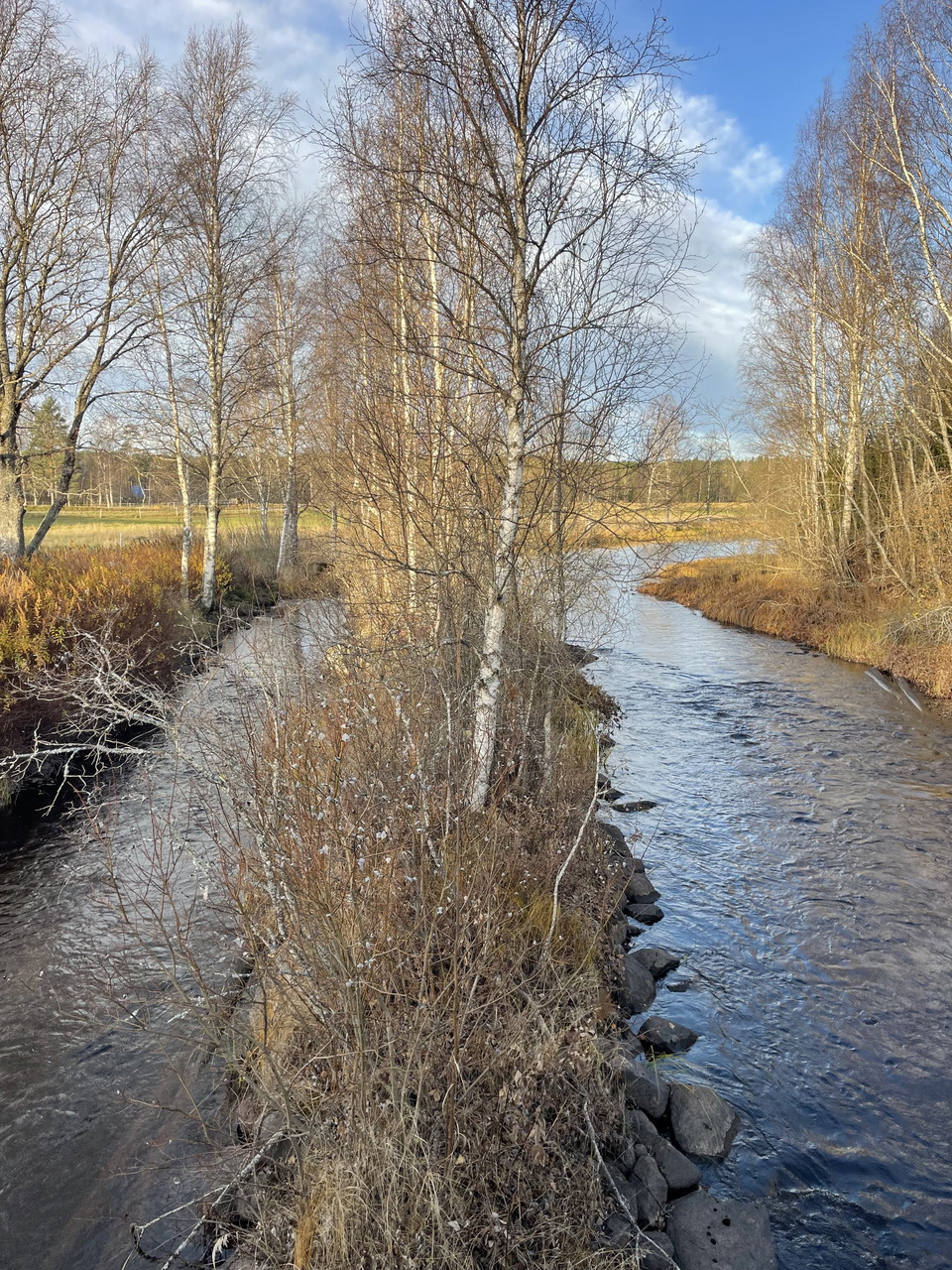
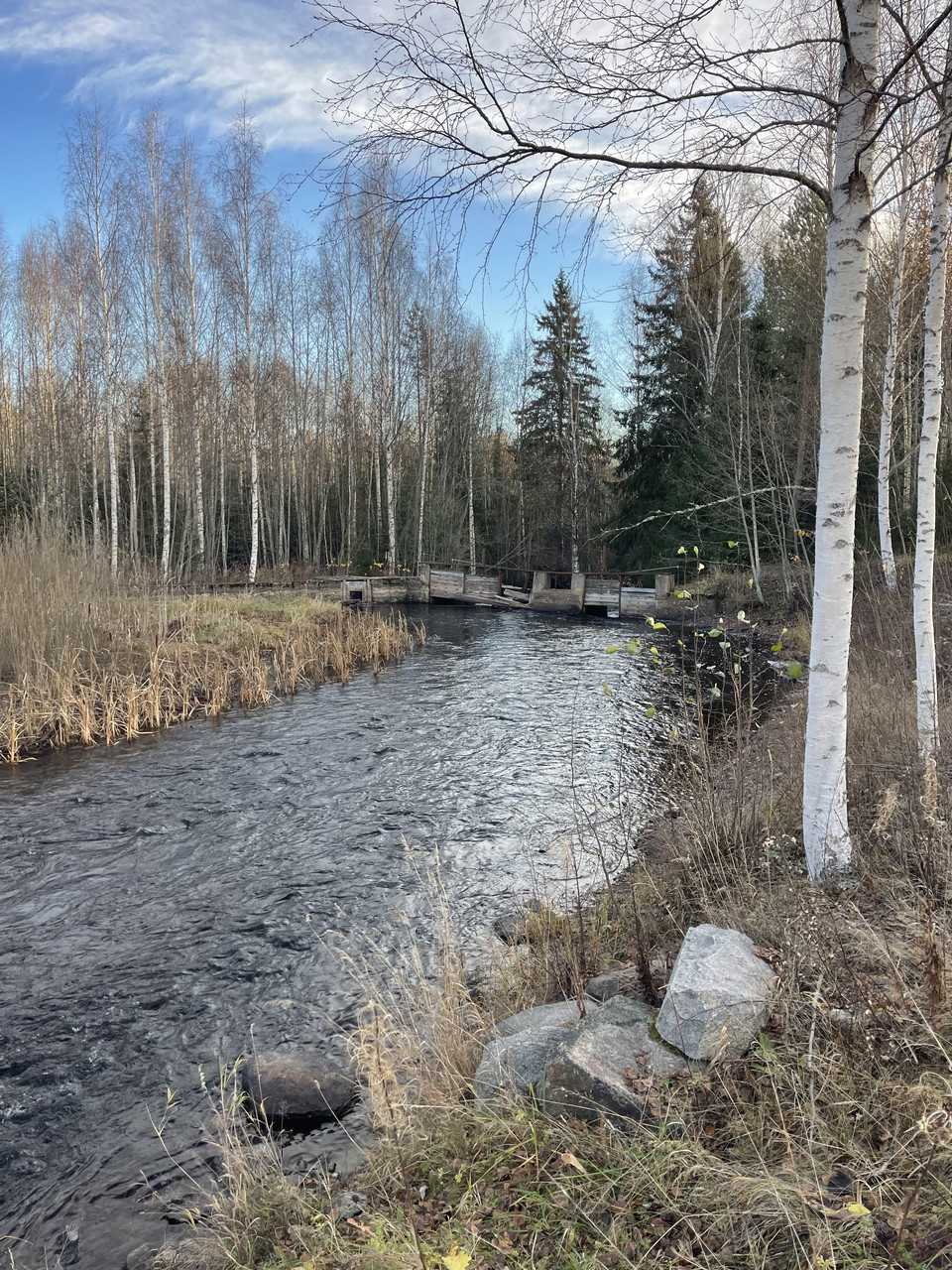
Silforsdammen, Långhed
- Culture
- County: Gävleborgs län
- 297.13 km away from you
Actions
Description
Throughout history, humans have always wanted to develop and use natural resources such as water to best improve their living conditions. Through this, society has progressed.
The 45-km-long Hässjaån river, which passes through here, has been used in many ways throughout history. Here at the bridge in Silfors, the river was probably first dammed up with logs in the early 1800s. To capture the power, a water wheel was used to drive the saw blade.
The current structure was probably built in the 1930s. The Silfors dam generated electricity for the sawmill from 1918 until the 1980s but is not in operation today.
Rafting on the Hässjaån river began in the 1880s and was important for the supply of wood to the timber industry in Sweden, but also locally to the Silfors sawmill. Owning forests provided an income for the forest owner and paid work for people who got jobs.
Timber was brought to the dam for transportation to the sawmill in Silfors. The timber was led via the flume into the sawmill area. In order to handle the increased amount of timber, a bypass with a channel and canal was later built. There are remnants of this bypass, and more information about it can be found at the rafting bridge along the footpath.
Right by the dam, right up against the embankment, there was a cooperative laundry for villagers that ceased in the late 1970s. Those doing the washing brought their own wood to heat the water in the boiler walls. The detergent was various forms of soda ash and lye that could be bought in the small trading stall, Hedbackas diversehandels filial, in Silfors.
Coal mines were also built next door and the waste pieces from the sawmill were charred. The coal was sent on to Alfta by horse and cart for further transportation on the railway, which was completed at the end of the 19th century. You can see that there was coal mining here as there is black stubble in the ground.
About 750 m northeast of the dam, along the road, you can see the timber hill. There, mechanical and ground-based sorting took place on a large flat surface. Even further away were the coal houses where the workers lived.
Now, in 2025, discussions are underway about old dams and water throughout Sweden. What it will look like at the dam in Silfors is a little unclear at the time of writing.
Activities And Facilities
- Culture
Contact
Address
Naturkartan Voxnadalen är en karta som är tänkt att samla allt för den som vill utforska Voxnadalen på egen hand. Vandringsleder, badplatser, höga naturvärden, utsikter, häftiga platser. Här samlar vi både kommunala anläggningar, ideella föreningars anläggningar (bidra gärna om ni saknas) och platser som finns på privat mark som kan vara intressanta för besökare i vårt biosfärområde. Ambitionen är att vi tillsammans bygger och bidrar till den bästa besöksguiden i Hälsingland.
Email address
Biosfärområde Voxnadalen
Please be aware that some of these texts have been automatically translated.
I’ve been here
I want to go here
Questions & Answers
Ask a question to other Naturkartan users.
Reviews
0 reviews
- 5 :
- 4 :
- 3 :
- 2 :
- 1 :