
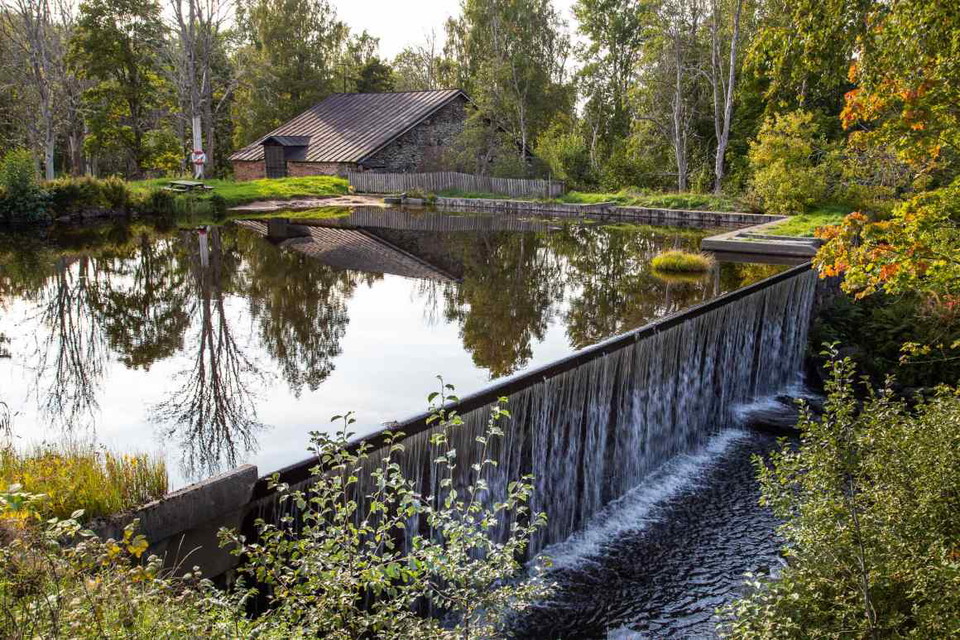
Klosters bruk
- Culture
- Valuable nature
- Near parking
- Parking
- Attraction
- County: Dalarnas län
- 191.21 km away from you
Actions
Activities And Facilities
- Culture
- Valuable nature
- Parking
- Attraction
Accessibility
- Near parking
Facts
Iron and copper smelting works were established on the Klosterån river as early as the 15th century. The site was originally called Riddarhyttan, but was named Kloster after a Cistercian monastery was founded here in 1486. In connection with King Gustav Vasa's reduction, the monastery was transferred to the Crown in 1527. Today, only the foundations of the monastery church remain.
In addition to iron production, gunpowder was also manufactured in the monastery from the mid-17th century. By the mid-18th century, gunpowder production had grown to become Sweden's largest gunpowder factory. The engineer and inventor Gustaf de Laval was employed at the factory's forge in 1876-77. Here he designed a milk separator that became a success on farms all over the world.
In 1888, poor communications and recession led to the mill's closure. The ruins and remains that can be seen on the site today are the only visible traces of the centuries-old industrial activity that took place in Klosters Bruk.
Directions
- The area is located 15 km northeast of Hedemora. Take road 270 towards Husby. After Dalälven, turn right. Drive just over 1 km on the road that turns south again and follows Dalälven. Then turn left towards Kloster and Dormsjö. You are there after about 3 km.
Contact
Address
Telefon: 0225-340 00
Email address
kommun@hedemora.se
Please be aware that some of these texts have been automatically translated.
I’ve been here
I want to go here 1

Questions & Answers
Ask a question to other Naturkartan users.
Reviews
0 reviews
- 5 :
- 4 :
- 3 :
- 2 :
- 1 :